

The 15-second answer
Do we serve Cabot?
Service Restoration serves Cabot from its two Little Rock offices, each rated 5.0 stars on Google. Near Little Rock a crew is typically on-site within 60 minutes, depending on drive time, traffic, road conditions and call volume. Cabot is further out, so it runs longer, and the 24/7 call center gives a straight answer on timing.
Key takeaways
- Cabot is served from two Little Rock offices, at 9524 I-30 and 7821 Doyle Springs Rd Suite F, each rated 5.0 stars on Google.
- Near Little Rock a crew is typically on-site within 60 minutes, depending on drive time, traffic, road conditions and call volume. Cabot is about 40 to 45 minutes out, so it runs longer, and the call center gives a straight answer on timing.
- Shutting off the main, or the well pump on a rural property, limits the damage while the crew is on the road.
- Slab and upstairs leaks in newer subdivisions, crawlspace leaks near downtown, septic backups on rural lots and hail damage shape most Cabot calls.
- Every job starts with a free inspection, and insurance coverage is decided by the policy and adjuster case by case, never promised.
Last updated
Cabot is in Lonoke County, about 40 to 45 minutes from Service Restoration's Little Rock offices on a clear road, up I-30 across the river, east on I-40 and north on US-67/167 past Jacksonville. The company does not have a Cabot office. It runs two offices in Little Rock, at 9524 I-30 and 7821 Doyle Springs Rd Suite F, both rated 5.0 stars on Google from 103 and 32 reviews. Inside the Little Rock area a crew is typically on-site within 60 minutes, depending on drive time, traffic, road conditions and call volume. Cabot is far enough out that response times run longer than that, especially at rush hour on US-67/167 or when the roads are icy. When you call, the 24/7 call center qualifies the job and gives you a straight answer on when a crew will get there, rather than a number that sounds good on the phone. Service Restoration was founded in 2014 and is independently owned, not a franchise.
Because the drive is longer, what you do in the first half hour matters more in Cabot than it does a mile from the office. Shut the water off at the main, which in most Cabot homes is at the meter box near the street or in the garage. If you are on a private well outside city water, turn off the well pump at its breaker so it stops feeding the leak. Switch off the power to wet rooms at the panel if you can do it without standing in water, lift rugs and furniture skirts off wet floors, and move photos, papers and electronics somewhere dry. Do not run a household vacuum on standing water. Take photos of everything before it is moved. Those steps limit how far the water spreads while the crew is on the road, and the photos help your adjuster later.
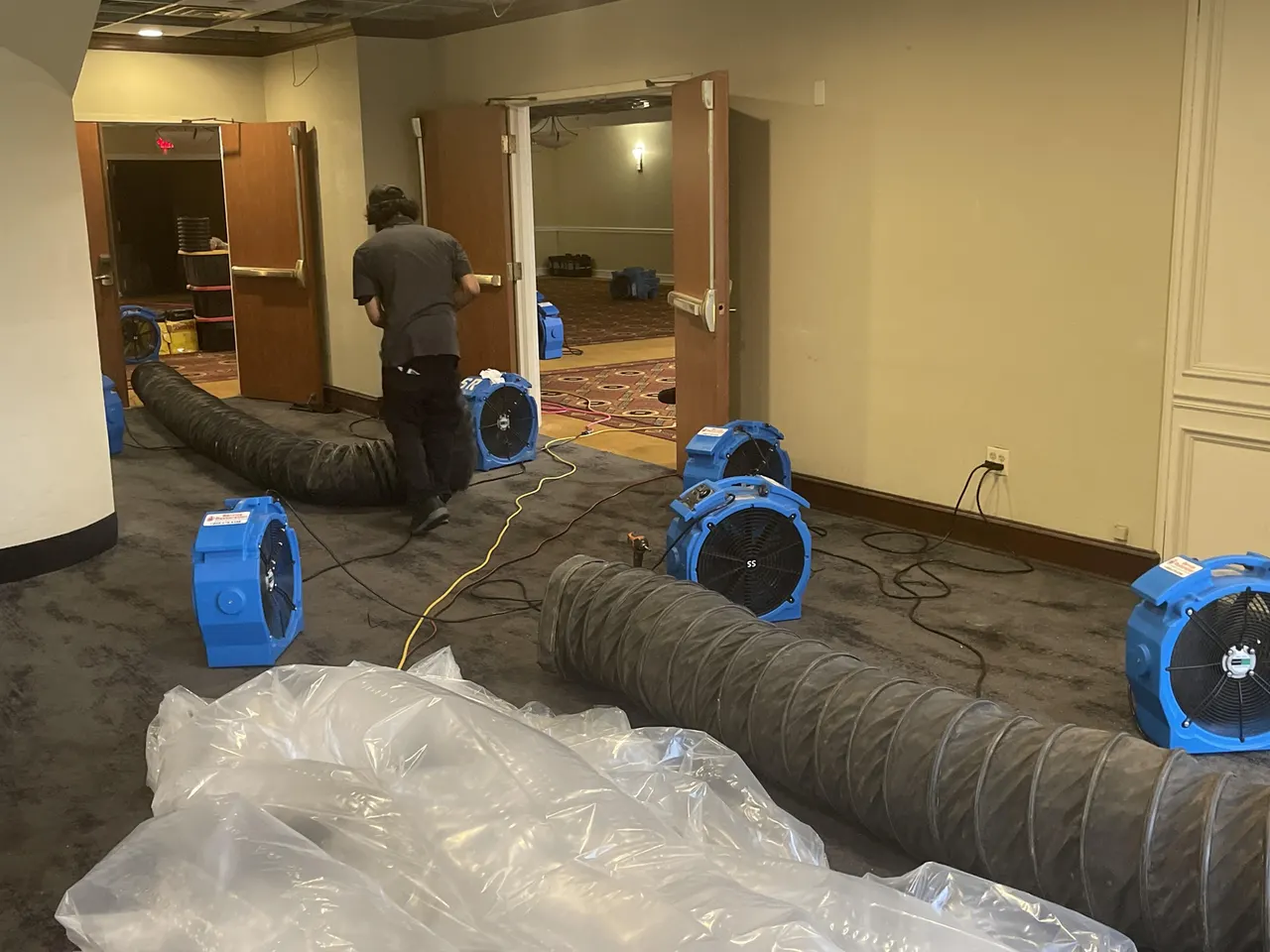
Most of Cabot's houses were built from the 1990s onward, as the town grew along US-67/167 and Highway 89 with commuters to Little Rock, Jacksonville and the air base. The typical Cabot home is a brick or stone-front house on a concrete slab, either a one-story with an attached garage or a two-story with the laundry upstairs and supply lines or the air handler in the attic. The water damage that follows from that housing is predictable: a washer hose or ice maker line that lets go on a slab and spreads under laminate and carpet into several rooms, an upstairs water heater or tub overflow that comes through the ceiling below, and a condensate line from an attic unit that clogs and quietly soaks the drywall for days. The free inspection uses moisture meters and thermal imaging to find the real edge of the wet area before anything is cut out.
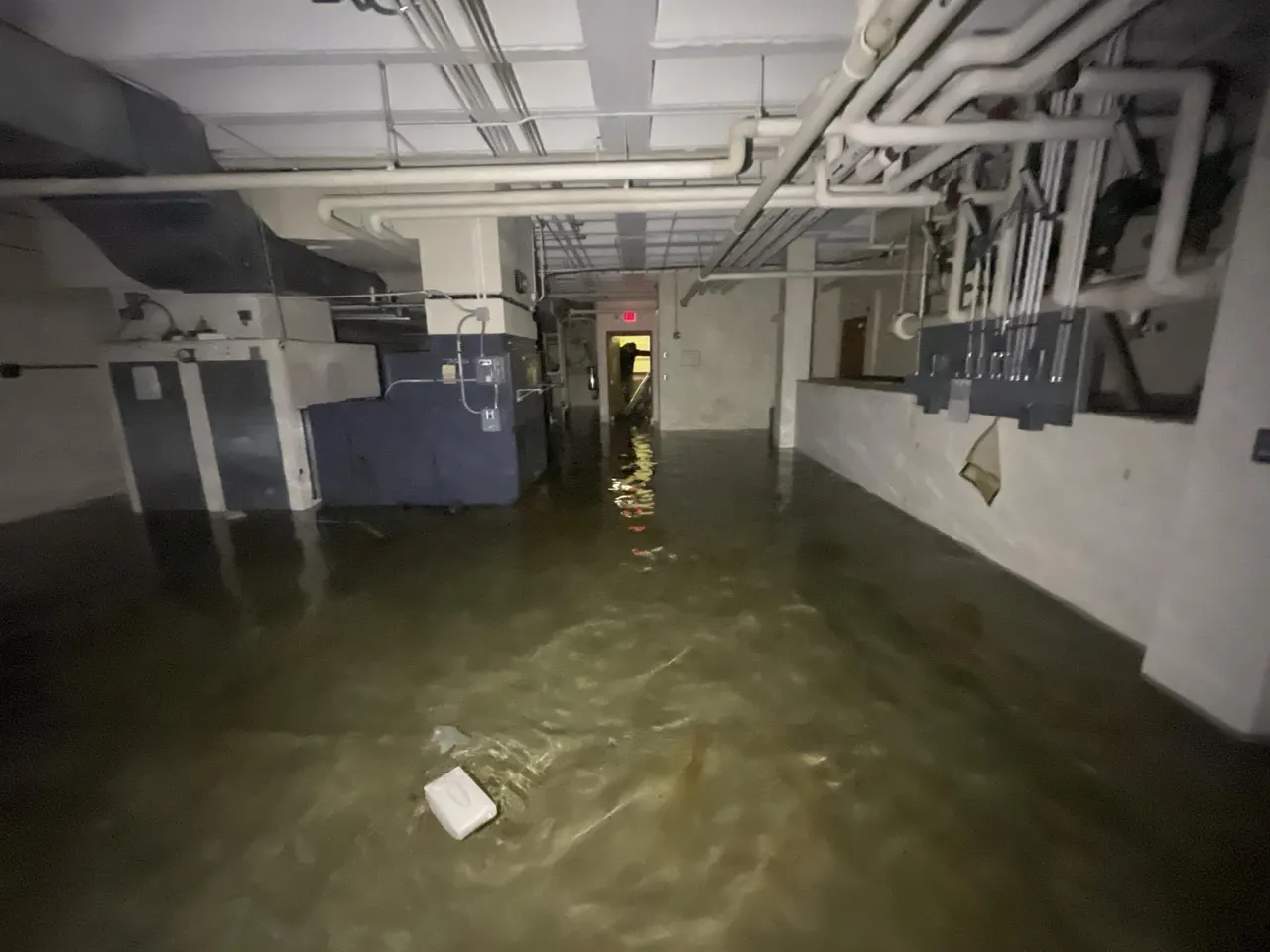
Closer to downtown Cabot, along Main Street and the older streets around it, the houses are older and more varied, including frame homes on short crawlspaces where a plumbing leak runs under the floor before anyone sees it. Out past the city limits toward Austin, Ward and the farmland that runs east into the rest of Lonoke County, homes sit on acreage, some are manufactured homes, some run on wells and septic systems, and a few have outbuildings and shops where water and storm losses happen too. A backed-up septic line is handled as contaminated water, with protective equipment, removal of soaked porous materials and cleaning before drying. Crawlspace water and septic backups are both situations where drying has to start quickly, because damp framing in a humid Arkansas summer is how mold gets started.
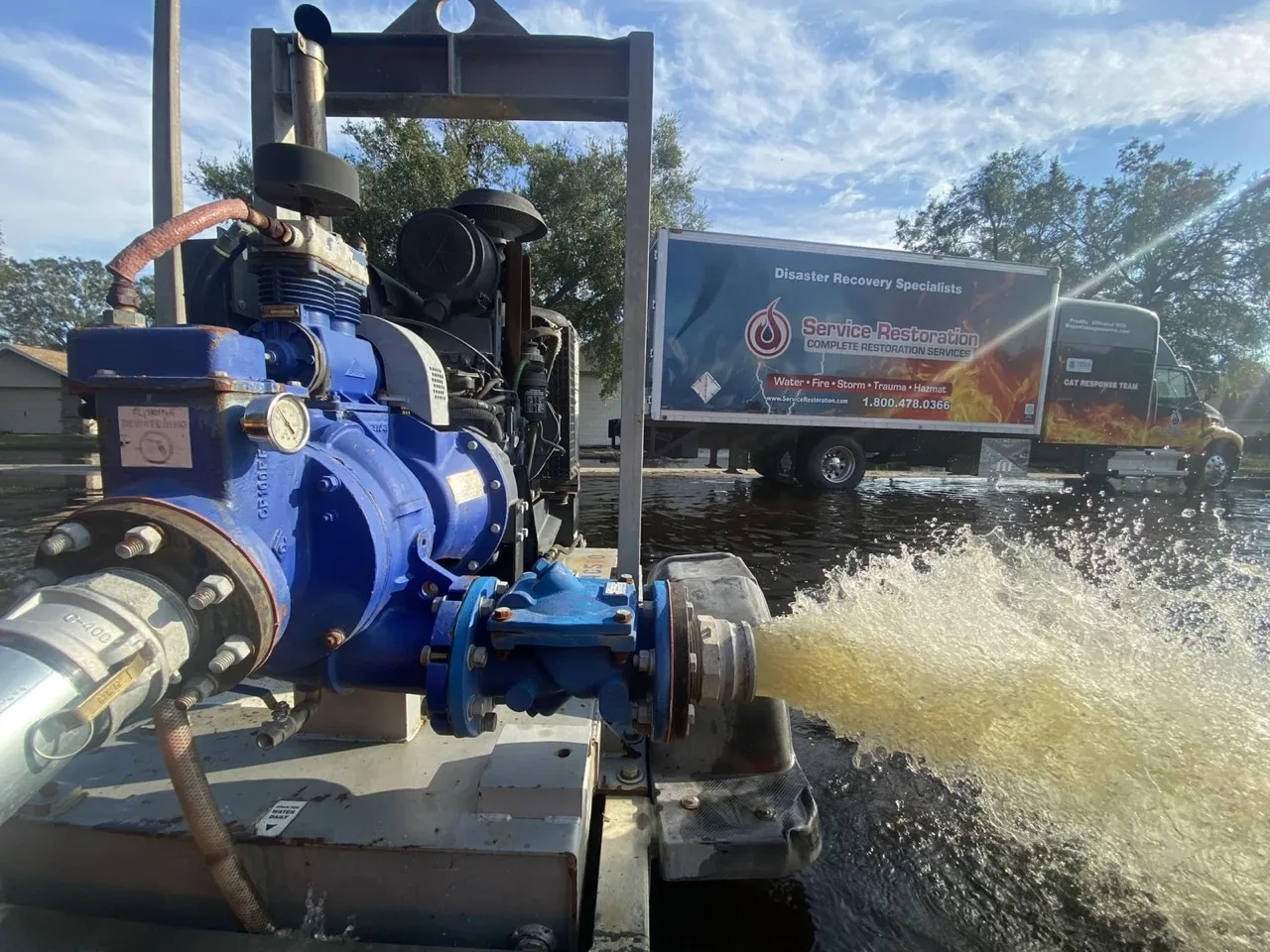
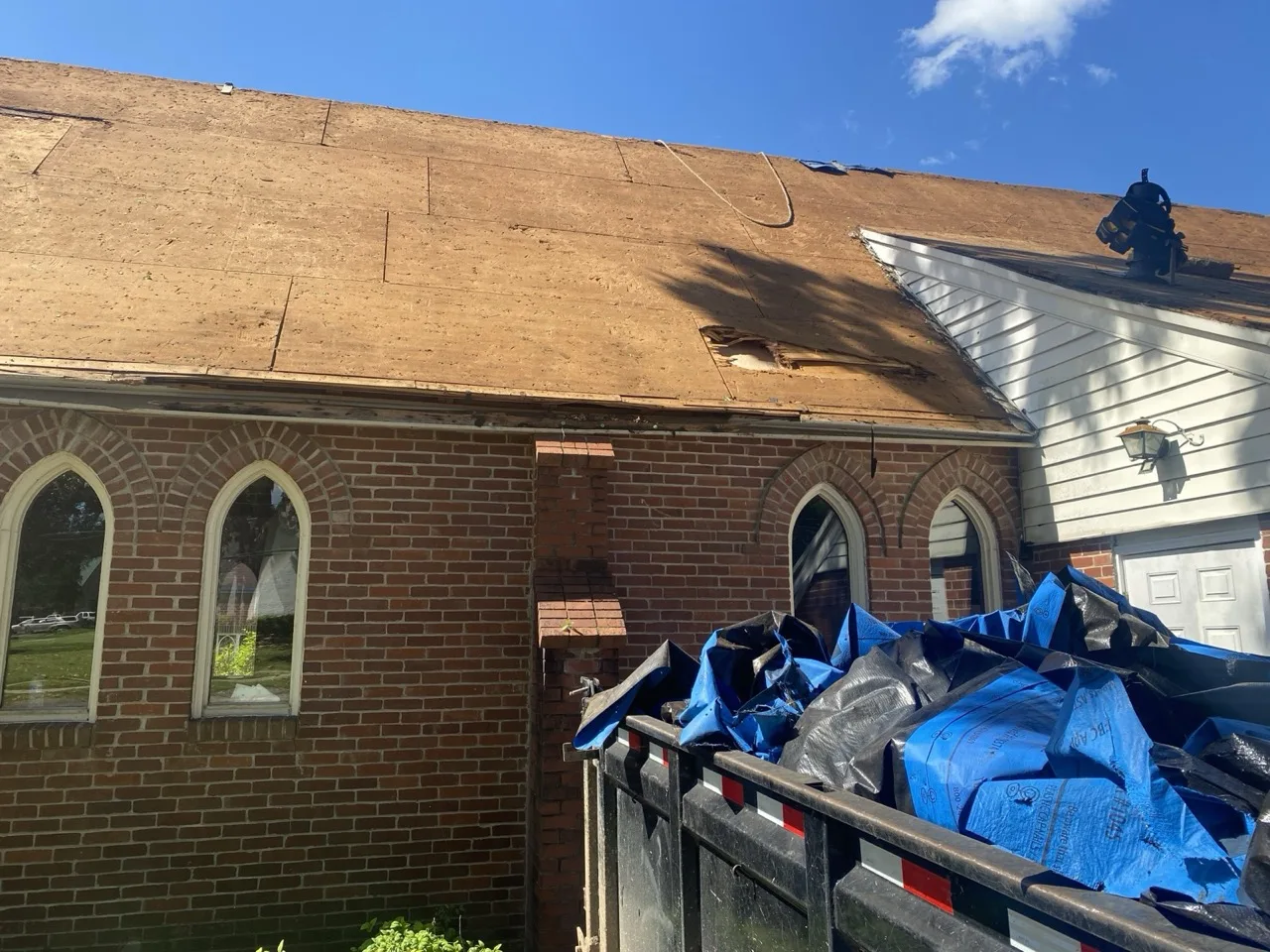
Cabot sits in open, rolling country where spring storms have room to build. Hail is a regular spring problem for Cabot roofs, siding and skylights, and straight-line winds and tornado warnings run through Lonoke County most years. After a storm the first job is stopping more water from getting in, so the crew tarps roof openings and removes debris, then pulls wet insulation and ceiling drywall and starts drying. Heavy rain also overloads the ditches and culverts that drain the newer subdivisions, and water that comes through a garage door or across a slab from outside is treated as contaminated water. The equipment library, including temporary power, matters more out here, where a storm can leave a house without electricity for days and drying cannot wait for the lines to come back up.
Fire and smoke damage is handled by the same company from start to finish: soot and smoke cleanup, extracting water left from firefighting, cleaning and storing contents, and the reconstruction that follows. Cabot's churches, schools, medical offices and the retail along Highway 89 and the US-67/167 frontage get the same commercial approach the company uses in hotels, churches and office buildings in Little Rock, with multiple crews when the loss is large and its own temporary power and air conditioning. Every job starts with a free inspection, not a price over the phone, and the loss is written up in Xactimate, the estimating software insurance adjusters use. The company is IICRC certified and EPA Lead Safe Certified. Coverage is decided by your policy and your adjuster, case by case, and nobody on the team will promise it.
What causes the most water, fire and storm damage in Cabot?
Cabot has the same humid subtropical climate as the rest of central Arkansas, but its open, rolling setting northeast of Little Rock gives spring storms a clear run at town. March through May brings severe thunderstorms with large hail, straight-line winds and tornado warnings across Lonoke County, and the same storms dump heavy rain that overwhelms subdivision ditches and culverts. Winter is the season that makes the drive matter. Ice and freezing rain can shut down US-67/167 and the rural roads around town, and the Arctic outbreaks of February 2021 and December 2022 brought nights in the teens that split attic supply lines in newer two-story homes and exposed pipes in crawlspaces, well houses and outbuildings. A burst line during an ice storm is exactly when response takes longest, which is why shutting off the main matters so much. Summer heat and humidity slow drying, so a leak needs equipment running within hours of the crew arriving.
What do Cabot jobs usually involve?
- Washer hose, ice maker and slab leak losses in Cabot's newer one-story and two-story subdivisions, dried in place where the meters allow
- Upstairs water heater, tub and attic condensate line failures that come through the ceiling of the room below
- Crawlspace plumbing leaks in the older homes near downtown Cabot, traced under the house before flooring is removed
- Septic backups and storm water through garages and across slabs, including rural homes on wells and septic around Austin and Ward, handled as contaminated water
- Emergency roof tarping and debris removal after hail and wind storms, with temporary power from the equipment library when the lines are down
- Fire and smoke cleanup, contents cleaning and storage, commercial water losses in churches, schools and offices, and reconstruction by the same company
Which Cabot neighborhoods do we cover?
Near US-67/167, Highway 89, downtown Cabot, Cabot High School, Little Rock Air Force Base to the southwest, the farmland of Lonoke County to the east, Austin and Ward next door.
Which restoration services do we offer in Cabot?
Cabot questions
Cabot is served from the Little Rock offices, about 40 to 45 minutes away by I-30, I-40 and US-67/167 on a clear road. Inside the Little Rock area a crew is typically on-site within 60 minutes, depending on drive time, traffic, road conditions and call volume, but Cabot is far enough out that it usually runs longer, and rush hour, a wreck on US-67/167 or ice on the roads will add more. The 24/7 call center at (501) 200-4968 will give you a straight answer on timing when you call, so you know what to do in the meantime.
Shut off the water at the main. In most Cabot homes it is at the meter box near the street or in the garage, and if you are on a well, turn off the well pump at its breaker. Turn off power to wet rooms if you can reach the panel without standing in water. Then pull rugs and loose items off the wet floor, put foil or blocks under furniture legs, move papers, photos and electronics to a dry room and take photos of everything. Do not use a household vacuum on standing water and do not walk under a ceiling that is sagging, since wet drywall can drop without warning.
It depends on how long it has been leaking and how far the water has run. An upstairs washer, water heater or tub leak soaks the subfloor first, then the insulation and ceiling drywall below, and some of it runs down inside the walls. A small stain can hide a wide wet area. The technician checks the ceiling, the walls and the floor below with moisture meters and a thermal camera during the free inspection, so only the wet material comes out and the rest is dried in place. The sooner drying starts, the smaller the job usually is.
Yes. A septic backup is handled as contaminated water. The crew uses protective equipment, removes and disposes of soaked carpet, pad, drywall and other porous materials it reaches, cleans and sanitizes the hard surfaces and then dries the structure. You will usually also need a septic service to pump the tank and find the cause, and the crew can tell you what it saw so the septic company knows where to start. Stay out of the affected rooms until the cleanup is done.
Yes. After hail or wind damage the first step is stopping more water from getting in, so the crew tarps the damaged areas and clears debris, then dries the attic, ceilings and walls underneath. If the storm knocked the power out, the company can bring temporary power from its equipment library to run the drying equipment. Reconstruction afterward is handled by the same company, which helps in the weeks after a big storm when every roofer and contractor in the area is booked.
That is decided by your policy and your adjuster, case by case, and nobody on the team will promise coverage. A sudden burst pipe, a septic backup, storm damage and water from outside are often treated differently from each other, and some of them depend on endorsements on the policy. What the team does is document the loss in Xactimate during the free inspection, with photos and moisture readings, and work with your adjuster once the claim is open so everyone is looking at the same scope.
All of Cabot, from downtown and Main Street to the subdivisions along Highway 89 and US-67/167, along with Austin, Ward, the rural parts of Lonoke County nearby, Jacksonville and Sherwood. The two Little Rock offices cover roughly a 90 minute radius. Response times out at this distance run longer than inside Little Rock, and the call center will tell you plainly how long it will be.