

The 15-second answer
What does fire damage restoration involve?
Fire damage restoration is Service Restoration's second core service after water damage: cleaning smoke and soot from every surface it reached, removing the odor at its source, boarding up openings and drying out the firefighting water. A local crew is typically on-site within 60 minutes, depending on drive time, traffic, road conditions and call volume.
Key takeaways
- A local crew is typically on-site within 60 minutes, depending on drive time, traffic, road conditions and call volume.
- Soot is acidic and keeps damaging surfaces until it is removed, so it is treated as urgent from the first visit.
- Firefighting water is dried out as part of the same job, not handed to a second company.
- Odor is removed at the source with thermal fogging and ozone, not covered with fragrance.
- The first visit is a free inspection, and the scope is written in Xactimate for the insurer.
Last updated
A house fire does its damage twice. The flames burn what they reach, and then the smoke travels through the rest of the building, settling into closets, ductwork, upholstery and the paint on walls three rooms away from where the fire started. By the time the fire department has finished, there is usually a great deal of water sitting in the floors and walls as well. Fire damage restoration means dealing with all three: the burned materials, the smoke and soot everywhere else, and the water that put the fire out.
Fire is the second service line Service Restoration is built around, after water damage, and the two are rarely separate jobs. Nearly every residential fire, whether it started in a kitchen, a wiring fault or a garage, arrives with a water problem attached, because the firefighting itself soaks the structure. The crew that shows up is the same IICRC certified team that handles burst pipes and slab leaks, which is why the water side of a fire loss is treated as urgently as the soot. Drying equipment goes down on the first visit instead of waiting until the smoke cleanup is finished.
Soot is not just dirt. It is acidic, and the longer it sits the more it etches into metal, discolors plastics and bonds with painted surfaces, which is the reason a wall that could have been cleaned in the first few days may need to be stripped and refinished a few weeks later. Smoke odor behaves the same way, soaking into porous materials until it can no longer be wiped off. This is why a fire job is treated as urgent, with a local crew typically on-site within 60 minutes depending on drive time, traffic, road conditions and call volume, even when the fire itself has been out for hours.
Many fire calls come from people who have been told by the fire department that the house is safe to enter, and who then walk in to find the smell is far worse than the visible damage. That is a normal first reaction, and it is the point at which a free inspection matters most. A technician walks the whole property, not just the room that burned, tests how far the soot has traveled, checks the attic and the ductwork, and gives a straight answer on what can be cleaned, what needs to come out, and roughly how long the work will run. Nothing is priced until someone has actually seen the damage.
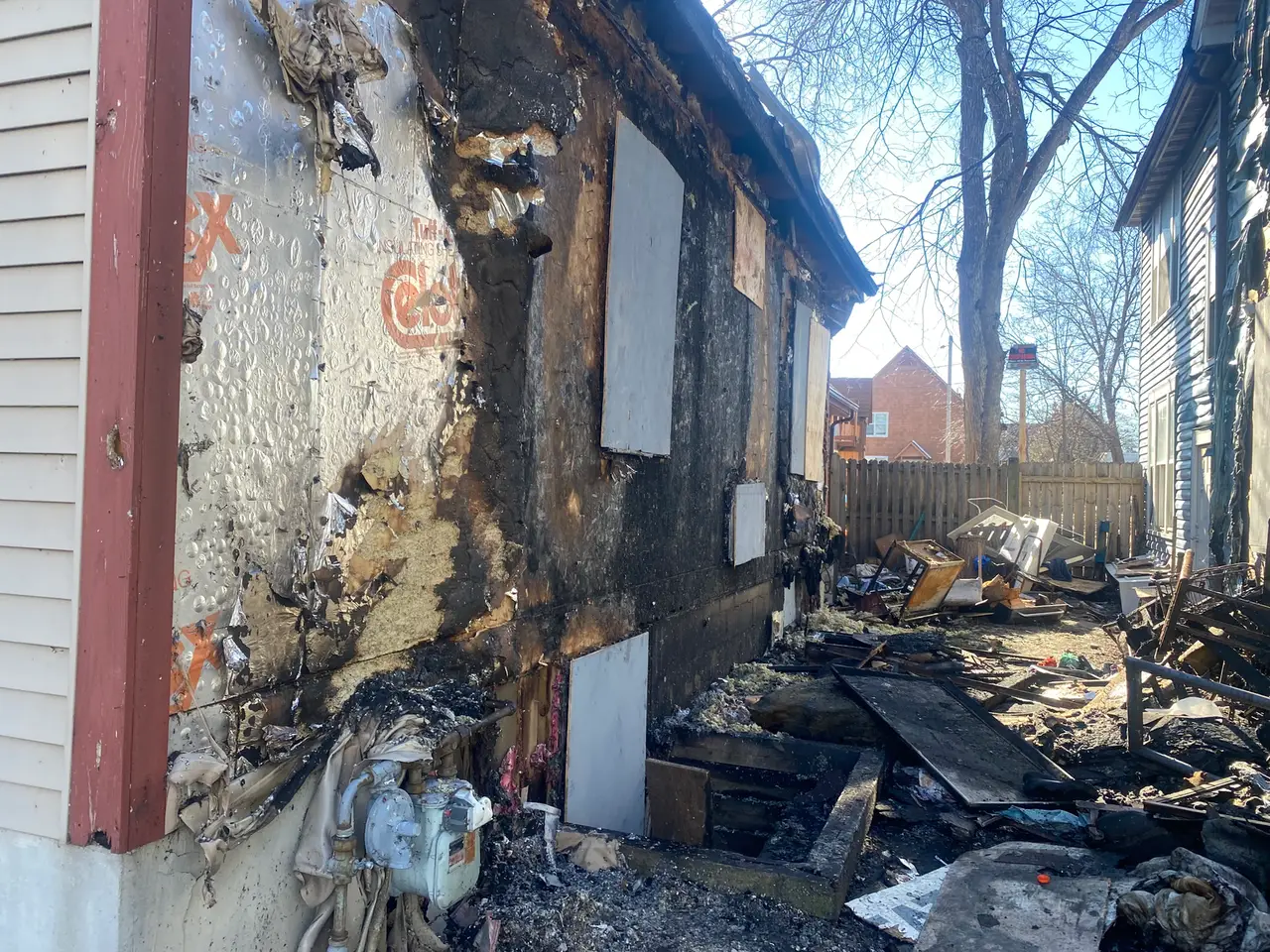
Fire restoration around Little Rock runs into a lot of older housing, including the Victorian houses of the Quapaw Quarter and the Craftsman bungalows of Hillcrest and the Heights, with plaster walls and layers of old paint, which is where the company's EPA Lead Safe certification comes into play once demolition starts. Across central Arkansas the job is handled by one company from the first board-up through smoke cleanup, drying and the rebuild of whatever had to be torn out, so the customer is not coordinating a cleaning contractor, a drying company and a builder on top of everything else. The company's own job photos include a house exterior being rebuilt and resided after a fire, which is what the finish line of a residential fire job looks like.
Insurance is involved in most fire losses, and the question of what will be covered comes up on the first call. Service Restoration does not promise coverage, because that depends on the policy and the cause, but the team documents the loss room by room, photographs the soot patterns before anything is cleaned, and writes the scope in Xactimate, the estimating software most insurers use, so the adjuster is looking at the same numbers the crew is working from.
What is included?
- Smoke and soot cleanup
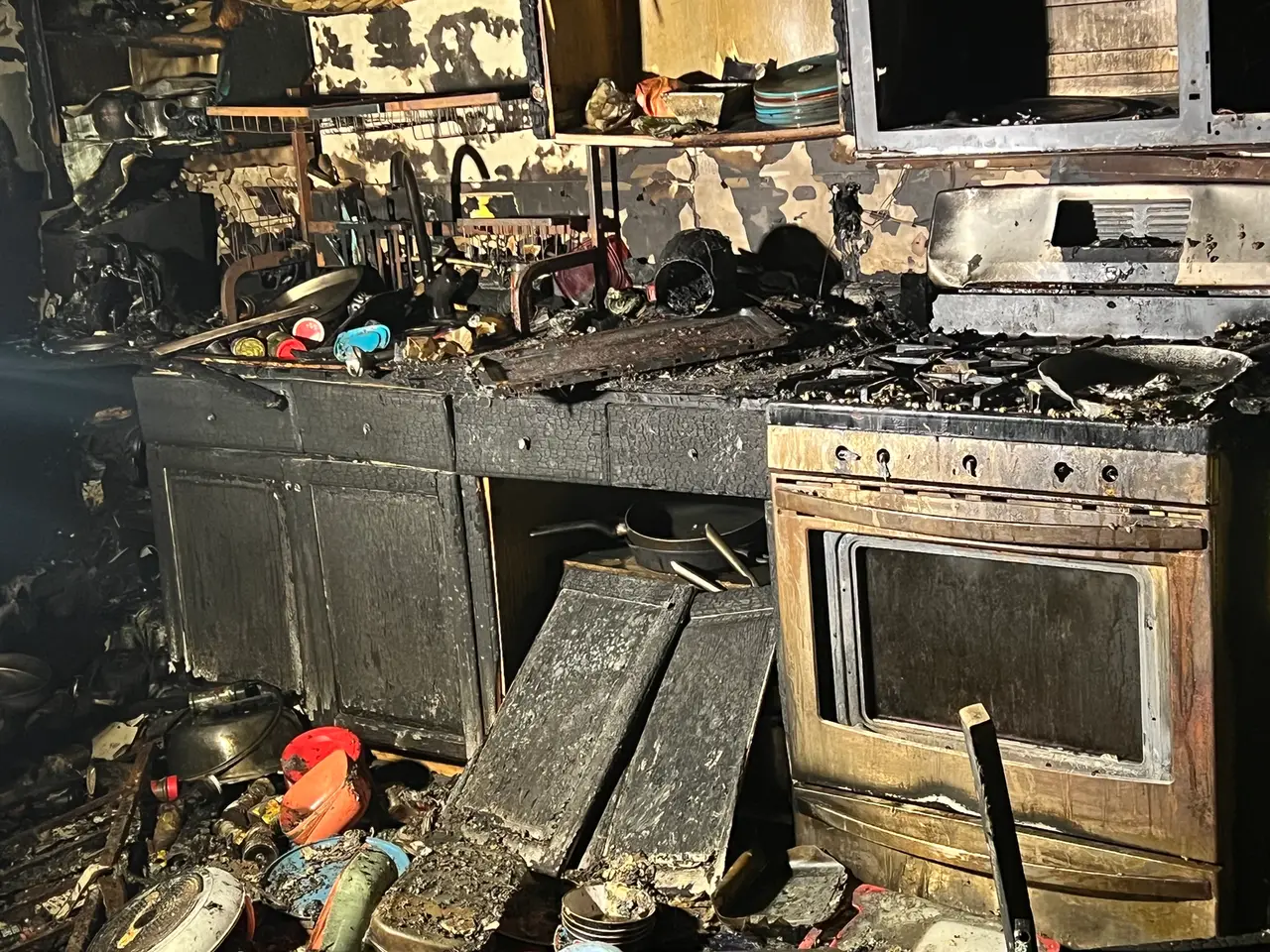
- Every surface the smoke reached is cleaned, not just the room that burned. Dry soot is lifted from walls and ceilings first with chemical sponges so it is not smeared deeper into the finish, then surfaces are wet cleaned with degreasing agents. HEPA vacuums pull loose residue out of carpet, upholstery and the fine cracks where it settles. Different fires leave different residues, and a greasy kitchen fire needs a different approach from a dry, powdery wood fire, so the method is chosen after the inspection, not before.
- Smoke odor removal
- Masking a smoke smell with fragrance does not work for long, because the odor lives in the materials, not the air. Once the soot source is removed, the remaining odor is treated with thermal fogging, which carries deodorizer into the same pores the smoke went into, and with ozone treatment of the affected rooms while the building is unoccupied. Ductwork is cleaned so the furnace or air handler does not push smoke smell back into cleaned rooms the first time it runs.
- Emergency board-up and temporary repairs
- A fire usually leaves openings: a window broken by the heat, a door forced by the fire department, a hole cut in the roof for ventilation. Those get boarded or tarped on the first visit so weather, animals and people stay out while the rest of the work is scheduled. Temporary power can be brought in from the company's own equipment library when the electrical service has been shut off.
- Water damage from firefighting
- Putting out a fire soaks the building, and that water drains into floors, subfloors and the ceiling below. Extraction and drying equipment goes in during the same visit as the smoke assessment, with moisture tracked by meter and by thermal imaging so wet material behind undamaged-looking walls is found before it causes a second problem. Fire and water damage restoration are treated as one job, not two.
- Contents, demolition and fire damage repair
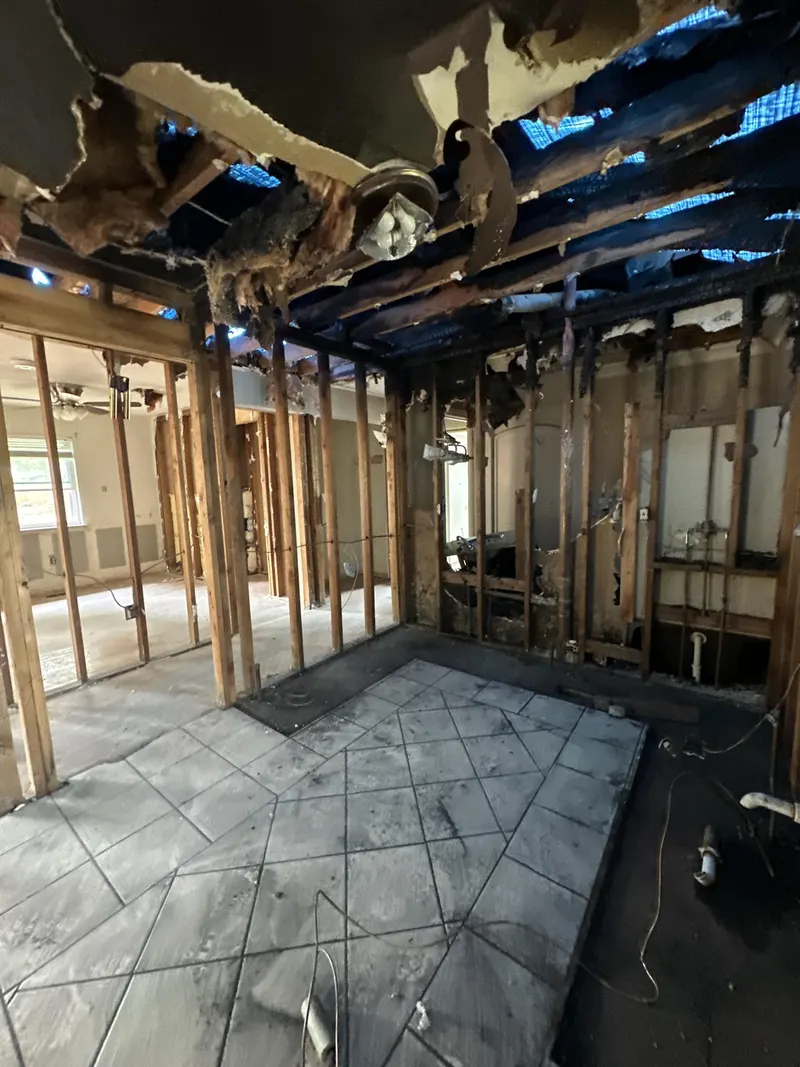
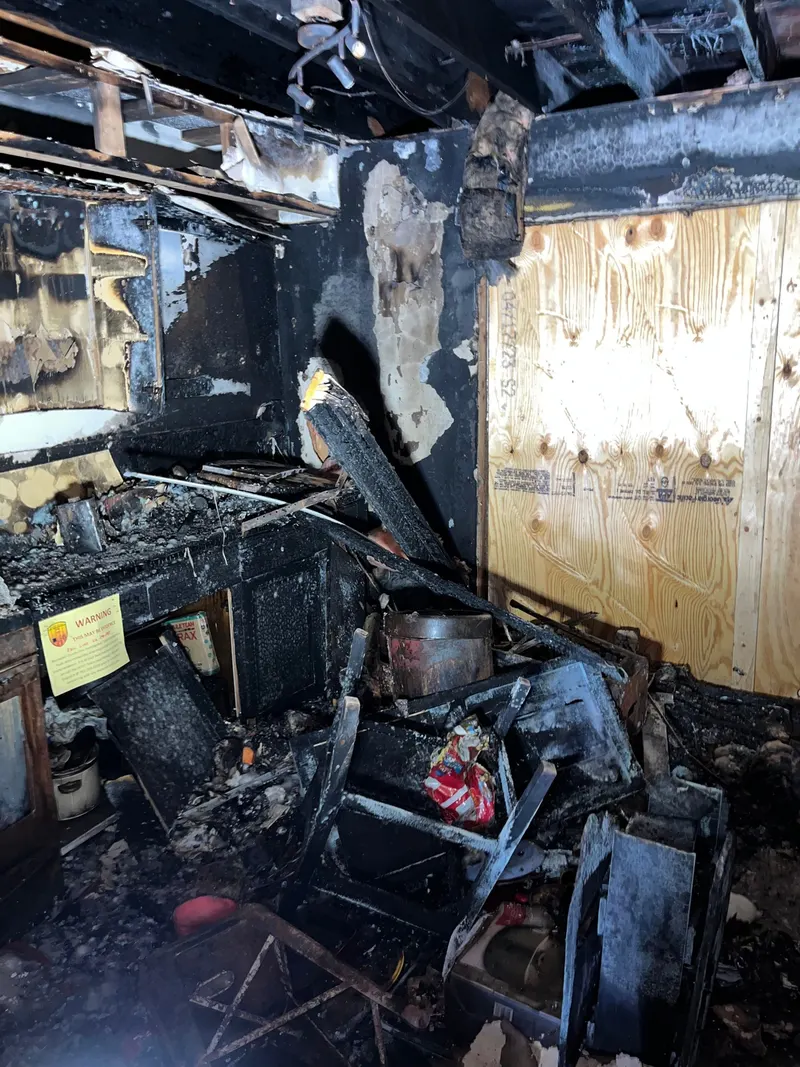
- Charred and unsalvageable materials are removed and the structure is opened up as far as the damage goes. Furniture, clothing, electronics and documents that can be saved are cleaned and stored off site while the house is worked on. When the cleanup is done, the same company rebuilds what was removed, from drywall and insulation to cabinets, trim and paint, so there is one scope, one timeline and one company to call.
How does the job run?
Call for a free inspection
The call center takes down what burned, whether the fire department has released the property, and whether anyone is still living in it. A local crew is dispatched to meet you there.
Walk-through and soot mapping
Typically within 60 minutes, depending on drive time, traffic, road conditions and call volume, a technician walks every room, checks how far the smoke traveled, tests soot on different surfaces, and looks for firefighting water in floors and walls with a moisture meter and a thermal camera. You get a plain-language read on what is salvageable before anything is priced.
Secure the building and start drying
Openings are boarded or tarped, electrical hazards are flagged, and drying equipment goes in wherever the firefighting water went. Items that need to be saved are packed out and logged before cleaning starts.
Cleaning and deodorizing
Loose soot is removed, surfaces are wet cleaned, ductwork is cleaned, and the odor is treated at the source with thermal fogging and ozone. Materials that cannot be cleaned are cut out and disposed of.
Rebuild and move back in
The torn-out areas are rebuilt by the same company, from framing and drywall through flooring and paint, and the cleaned contents come back from storage. The scope is written in Xactimate so the insurer sees the same line items the crew worked from.
What does it cost?
There is no single typical price for a fire job, because two fires that look the same from the street can be very different inside. What drives the cost is how far the smoke traveled beyond the room that burned, what kind of residue it left, how much firefighting water got into the structure, how much material has to be removed rather than cleaned, and how much of the house has to be rebuilt afterward. A small contained kitchen fire with quick cleanup sits at one end, and a fire that ran through the attic and soaked three floors sits at the other. Service Restoration does not quote fire work over the phone. A technician inspects the property for free, documents the damage room by room, and writes the scope in Xactimate so the number is grounded in what was actually found. Most fire losses involve an insurance claim, and that documentation is what the adjuster works from, though coverage itself depends on the policy.
Areas we cover
- Little RockPulaski County, AR
- BentonSaline County, AR
- BryantSaline County, AR
- CabotLonoke County, AR
- ConwayFaulkner County, AR
- Hot SpringsGarland County, AR
- JacksonvillePulaski County, AR
- MaumellePulaski County, AR
- North Little RockPulaski County, AR
- Pine BluffJefferson County, AR
- SearcyWhite County, AR
- SherwoodPulaski County, AR
Fire Damage Restoration questions
Service Restoration of Arkansas runs local crews out of two offices in Little Rock, covering roughly a 90 minute radius across central Arkansas. A crew is typically on-site within 60 minutes, depending on drive time, traffic, road conditions and how many calls are active. The line is answered 24 hours a day, and the dispatch works the same at two in the morning as it does at noon.
Usually not during the cleanup. Soot and smoke residue irritate eyes and lungs, the ozone treatment requires the building to be empty, and the power or water may be shut off. The technician will tell you honestly whether any part of the house is livable. If you have to move out, contents can be cleaned and stored while the work runs, and the documentation of the loss can support a temporary housing conversation with your insurer, though what the policy pays is case by case.
By removing the source first. Smoke odor sits in soot deposits, in porous materials and inside the ductwork, so cleaning those is most of the answer. Whatever odor remains is treated with thermal fogging, which pushes deodorizer into the same pores the smoke went into, and ozone treatment while the house is empty. Air fresheners, or ozone alone without the cleaning, hide the smell for a few weeks and then it comes back.
Yes, and it is handled as part of the same job. The water used to put a fire out drains into subfloors, insulation and the ceilings below, and if it is left while the smoke cleanup is scheduled, it causes a second round of damage and raises the risk of mold. Extraction and drying equipment goes in on the first visit, and moisture is tracked with meters and thermal imaging until the structure reads dry.
It depends on how far the smoke traveled, what kind of residue it left, how much firefighting water got into the structure, and how much has to be rebuilt rather than cleaned. A fire contained to a stovetop and a fire that ran into the attic are very different jobs. Service Restoration does not quote fire work over the phone. The free inspection documents the loss room by room, and the scope is written in Xactimate from what was found.
Fire is a loss most homeowner policies address, but coverage is decided by the policy and the circumstances, so Service Restoration does not promise it. What the team does is document the damage before anything is disturbed, photograph the soot patterns, write the scope in Xactimate, the estimating software most insurers use, and talk directly with the adjuster once a claim is open so the conversation is based on the same numbers.
Do not go back in until the fire department says the building is safe, and do not start wiping walls, because wet soot smears into paint and makes it harder to clean. Open windows if it is safe to do so, keep people and pets out of the affected rooms, and call for a free inspection. Boarding up broken windows and doors, tarping any roof openings, and getting drying equipment on the firefighting water are the first things the crew does on arrival.