

The 15-second answer
What does reconstruction services involve?
Reconstruction is the second half of a restoration job: rebuilding the drywall, ceilings, flooring and cabinets that were removed during mitigation. Service Restoration handles the rebuild itself, under a founder with close to 30 years as a licensed contractor, so one company carries a loss from the emergency call to the finished room, starting with a free inspection.
Key takeaways
- Mitigation dries the building. Reconstruction puts it back. Service Restoration does both, so there is no second contractor to schedule.
- Founder Dan had close to 30 years as a licensed contractor in commercial construction before the company started in 2014.
- Continuous flooring and cabinet work are what push a job toward $40,000 to $50,000. The exact figure comes from the free inspection.
- The rebuild scope is written in Xactimate, so the adjuster and the crew work from the same line items.
- Commercial rebuilds at hotels, churches and offices are planned around the people still using the building.
Last updated
Restoration from water damage has two halves. The first is mitigation: getting the water out, drying the structure, and removing whatever cannot be saved. The second is reconstruction: putting the building back. The mitigation stage is where the emergency ends, but it is also where a house or a hotel lobby is left with open stud walls, bare subfloor and a ceiling cut back to the joists. Reconstruction is the part of the job that turns that back into a finished room, and it is the part many restoration companies hand off to someone else.
Service Restoration does not hand it off. The same company that extracted the water, cleaned the soot or tarped the roof rebuilds the drywall, ceilings, insulation, flooring, cabinets, trim and paint that had to come out. For the customer, that means one scope, one timeline and one phone number, rather than a drying company finishing on a Tuesday and a general contractor who cannot start for three weeks. It also means nobody argues about where the water damage ended and the rebuild began, because the company that opened the walls is the company closing them.
That approach is possible because of where the company came from. Founder Dan spent close to 30 years as a licensed contractor with a background in commercial construction before starting Service Restoration in 2014, and the business did insurance-based roofing work before it pivoted to interior restoration. A rebuild is not a side service bolted onto a cleaning operation here. Framing, drywall finishing, flooring and cabinet work are construction trades, and the company was a construction business first.
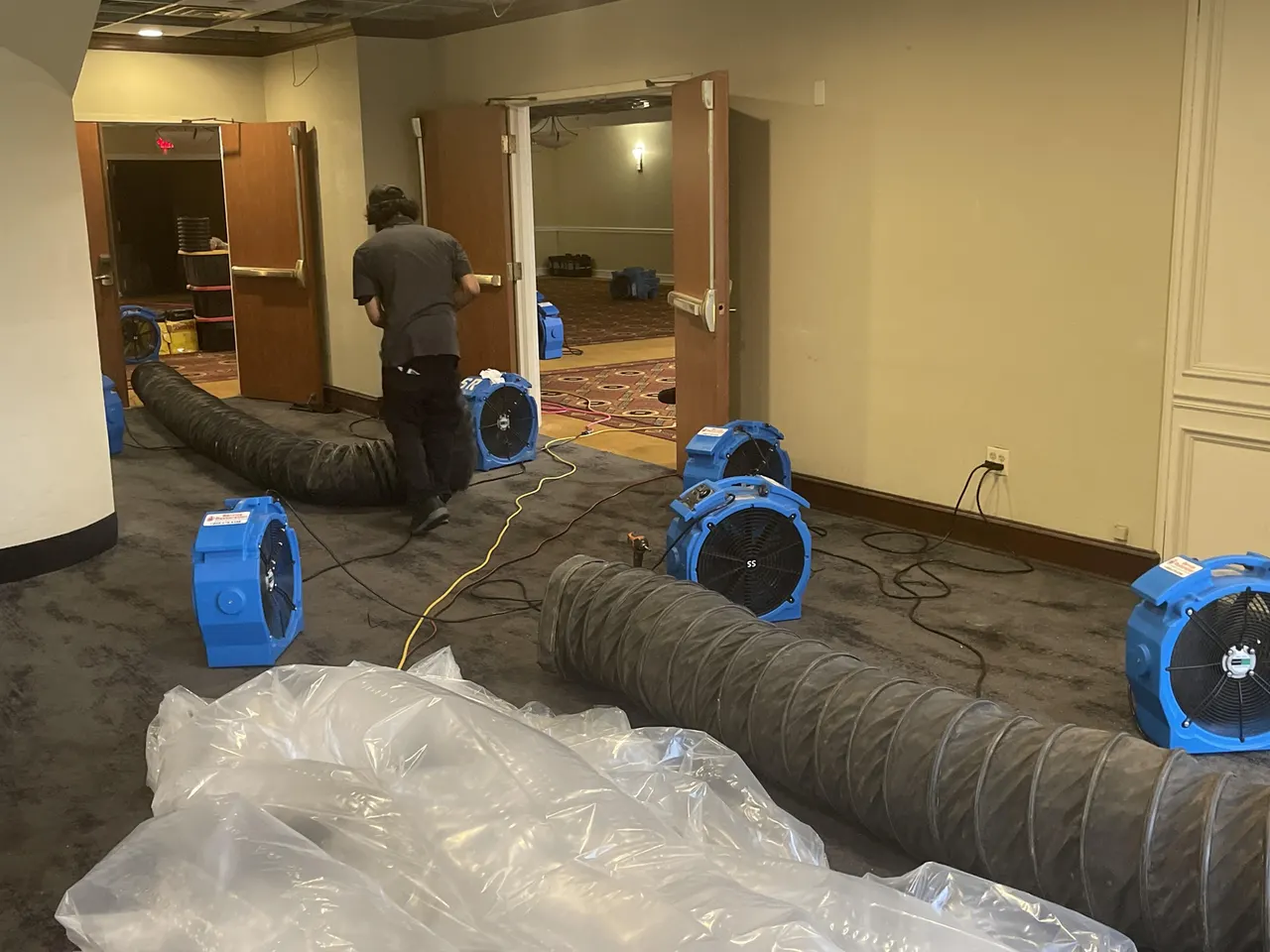
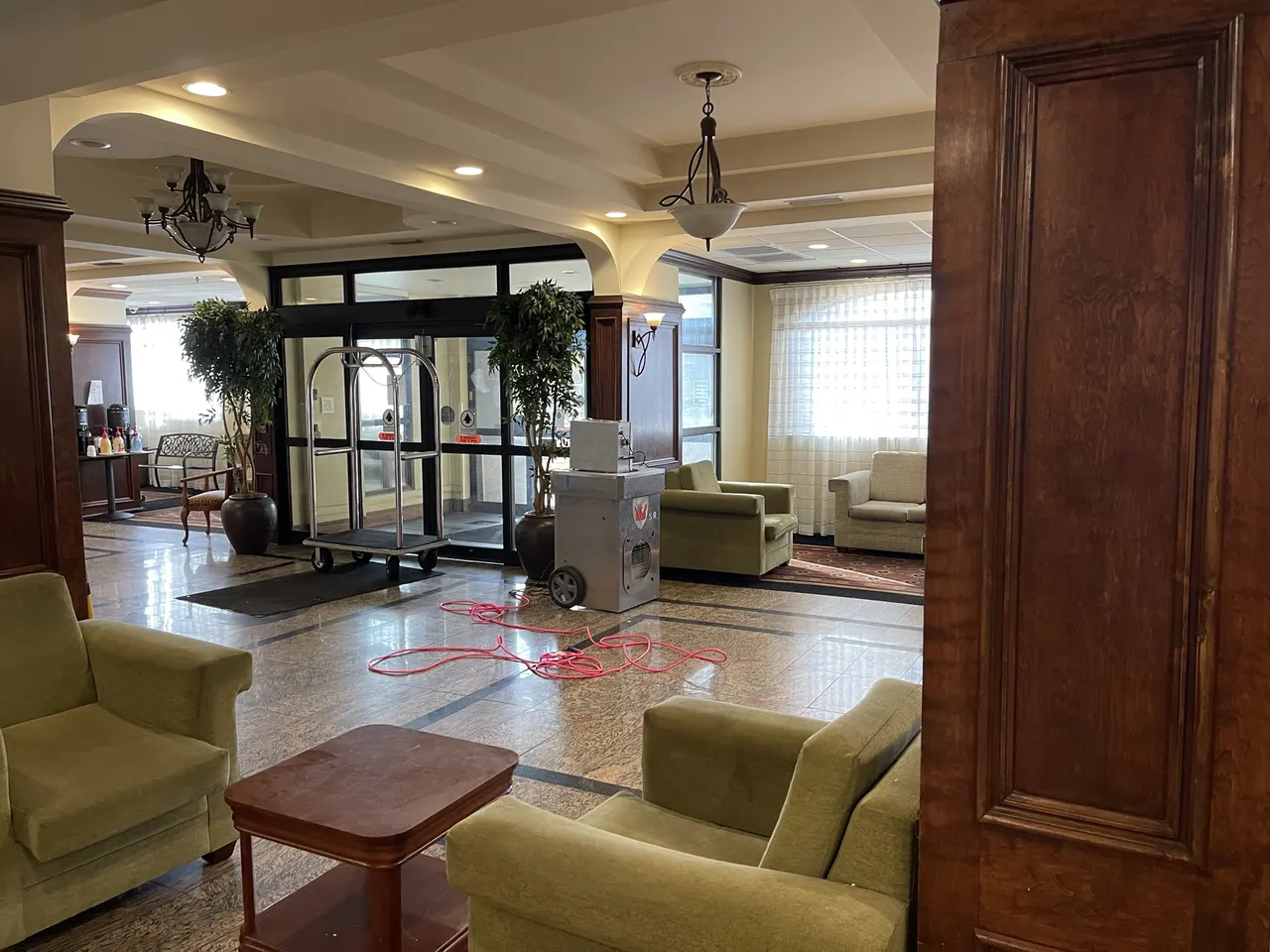
The hotel lobby in the company's own before and after photos is a good example of the scale. A frozen pipe burst a sprinkler line, brought part of the lobby ceiling down and left debris and standing water across the floor. After the water was extracted and the structure dried, the same team rebuilt the space with new drywall and lighting and handed back a finished lobby, not a dry shell. The company's job photos also show a house exterior being resided after a fire, which is the residential version of the same idea: the loss is not over until the building looks the way it did before.
Water mitigation and reconstruction are also where most of the cost difference between jobs comes from. Drying out a kitchen or a laundry room after a supply line fails is a relatively contained piece of work. Rebuilding is where the scope opens up, especially with continuous flooring that runs through several rooms. When the same hardwood or plank floor runs from the kitchen through the dining room and into the hallway, as it often does over a slab leak in a brick ranch, a damaged section often cannot be patched without a visible seam, which means the whole run comes up. The same logic applies to cabinets, where pulling and resetting a run of lower cabinets to replace the floor beneath them is a substantial job on its own. Reconstruction or continuous flooring like this is what can push a job to $40,000 to $50,000.
Reconstruction around Little Rock often means working in older housing. The Victorian houses of the Quapaw Quarter and the Craftsman bungalows and Tudor cottages of Hillcrest and the Heights have plaster walls, layers of old paint and original hardwood over a crawlspace, and they need a company that holds EPA Lead Safe certification and a crew that knows how to match what is already there. The scope is written in Xactimate, the estimating software most insurers use, so the line items the adjuster reviews are the same line items the crew builds from.
What is included?
- Drywall, ceilings and insulation
- Water-damaged ceilings and walls are cut back to clean, dry material during mitigation and then reframed where needed, insulated, hung, taped, finished and textured to match the surrounding surfaces. A ceiling water damage repair is finished to the point where the patch is not visible, not just closed up.
- Flooring, including continuous runs
- Hardwood, laminate, plank and tile are replaced over a dry, sound subfloor. Where a floor runs continuously across rooms and a match cannot be made at a seam, the full run is replaced, which is the single most common reason a rebuild scope grows.
- Cabinets, countertops and trim
- Kitchen and bathroom cabinets that stood in water are pulled, the floor and wall behind them repaired, and the cabinets reset or replaced along with countertops, baseboard, casing and doors. Where only the lower cabinets were damaged, the uppers are protected and left in place.
- Fire and storm rebuilds
- After a fire, charred framing is replaced and the structure is rebuilt from the studs out, including siding and roofing on the exterior. After a storm, the roof section, soffit, ceiling and any wall that took water are repaired once the building is dry.
- Commercial reconstruction
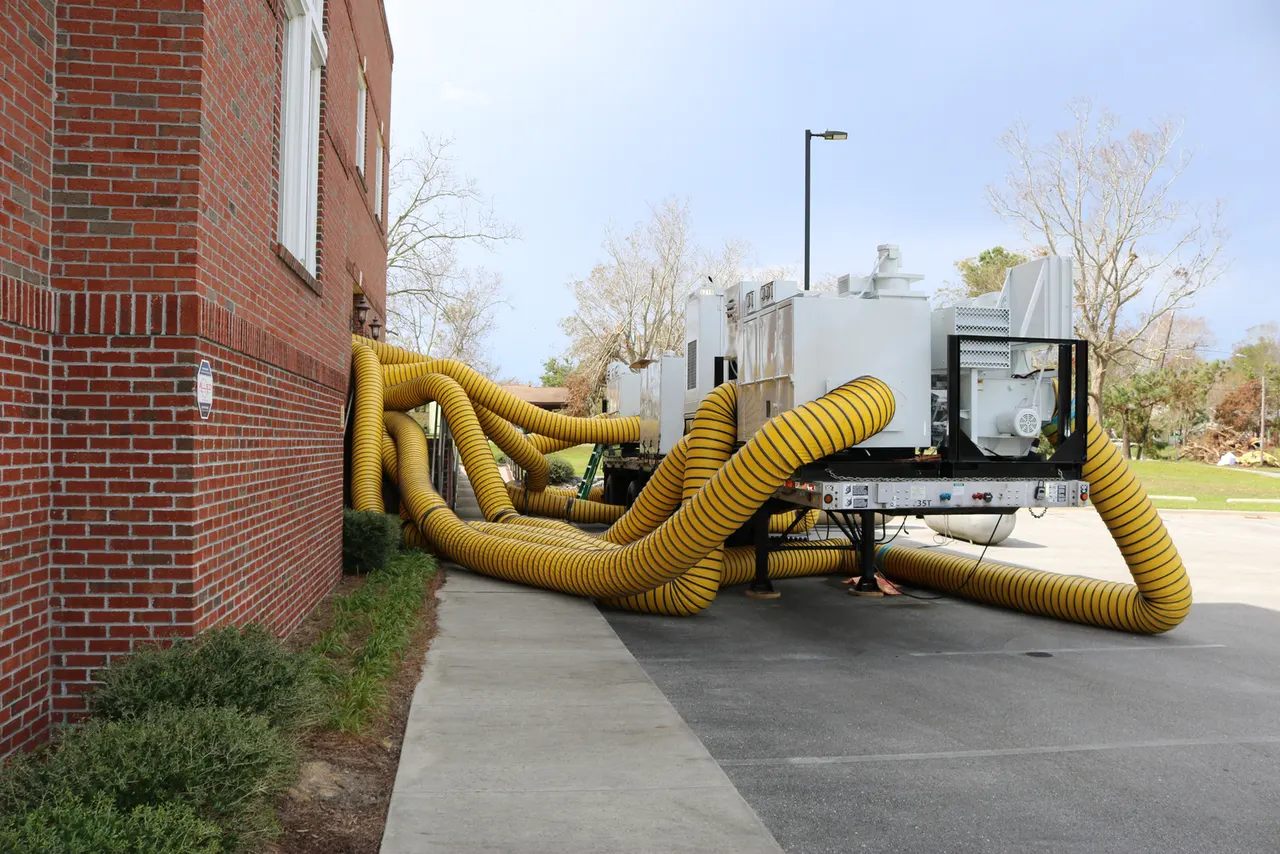
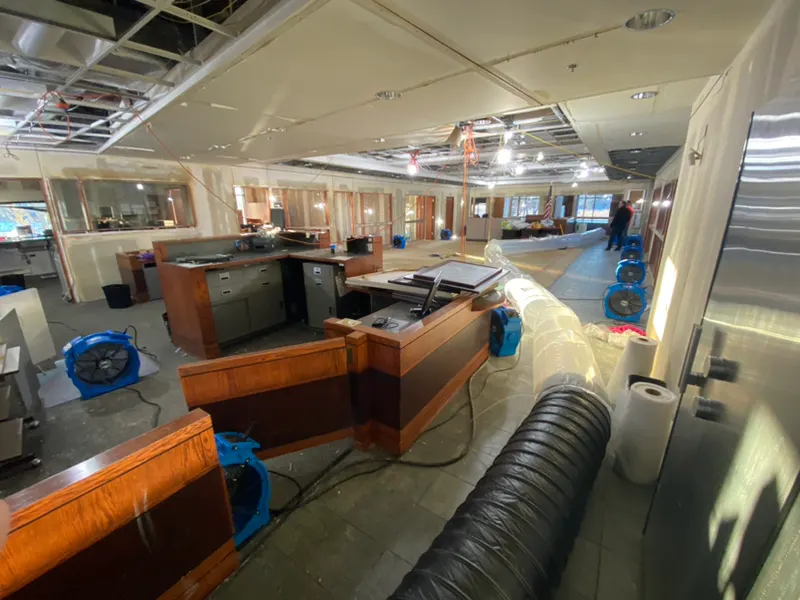
- Hotels, churches and office buildings are often still in use while the rebuild runs, so work is planned around tenants, guests, staff and building security. The equipment library, including temporary power and air conditioning, means the job is not waiting on a rental company.
How does the job run?
Free inspection and mitigation first
Every rebuild begins where the loss did. The free inspection documents the damage, mitigation dries the structure, and the reconstruction scope is written from what was actually removed, not estimated from the doorway.
Scope written in Xactimate
The rebuild is itemized in Xactimate, with every square foot of drywall, flooring and paint listed. If a claim is open, that scope goes to the adjuster, and differences are worked out before the first sheet of drywall goes up.
Materials chosen and matched
Flooring, cabinets, tile and trim are matched to what was there, or chosen by the owner if a change is wanted. Where a true match is not possible on a continuous floor, the scope says so up front.
Rebuild
Framing, insulation, drywall, finishing, flooring, cabinets, trim and paint are completed by the same company that did the mitigation. The owner deals with one company throughout, rather than a separate builder.
Walk-through and contents returned
The finished rooms are walked with the owner, remaining items are addressed, and any contents that were cleaned and stored during the job are returned to a finished space.
What does it cost?
| Job | What it covers | Typical range |
|---|---|---|
| Drying and mitigation only, average flooded basement | For comparison. Extraction and drying, no rebuild | $5,000 to $10,000 |
| Reconstruction after mitigation | Continuous flooring replaced across rooms, cabinets pulled and reset, drywall and paint | Can push a job to $40,000 to $50,000 |
| Large commercial loss | Multi-floor hotel, church or office building losses | Can run over $1,000,000 |
Areas we cover
- Little RockPulaski County, AR
- BentonSaline County, AR
- BryantSaline County, AR
- CabotLonoke County, AR
- ConwayFaulkner County, AR
- Hot SpringsGarland County, AR
- JacksonvillePulaski County, AR
- MaumellePulaski County, AR
- North Little RockPulaski County, AR
- Pine BluffJefferson County, AR
- SearcyWhite County, AR
- SherwoodPulaski County, AR
Reconstruction Services questions
Water mitigation is the emergency stage: stopping the source, extracting the water, drying the structure with air movers and dehumidifiers, and removing material that cannot be saved. Restoration from water damage, in the full sense, includes the reconstruction that follows, rebuilding the drywall, flooring and cabinets the mitigation removed. Many companies only do the first half. Service Restoration does both, under one scope, with the same company drying and rebuilding.
Not with Service Restoration. The company rebuilds what it tore out, from framing and drywall to flooring, cabinets and paint, and it was a construction business before it was a restoration business. Using one company means the drying and the rebuild are sequenced together, there is no gap between a drying crew leaving and a builder arriving, and there is one point of contact for questions and for the insurance adjuster.
It depends on how much was removed and what is being put back. A few sheets of drywall and a repaint is a modest job. A continuous hardwood floor through three rooms, lower cabinets pulled and reset, and a ceiling rebuilt is a different scale, and reconstruction or continuous flooring like that can push a job to $40,000 to $50,000. That figure is a range from completed jobs, not a quote. The free inspection and the written Xactimate scope set the real number.
Yes. A water damaged ceiling is cut back to dry, sound material during mitigation, the cavity above is dried and checked with moisture readings, and then the drywall is replaced, taped, finished and textured to match the rest of the ceiling before painting. Painting over a stain without opening the ceiling is not a repair, because the wet insulation and drywall behind it stay wet. Where the leak came from a roof or a pipe, that source is addressed before the ceiling is closed.
Because a flooring patch is visible. When hardwood or plank flooring runs continuously from one room into the next without a threshold, replacing only the wet section leaves a seam and often a color or sheen mismatch, since the existing floor has aged and the new material has not. Most owners want the finished floor uniform, so the full continuous run is replaced, and that single decision is the most common reason a rebuild scope grows. The inspection and the scope flag this before the work starts.
Sometimes, depending on the policy and the cause of the loss, and Service Restoration does not promise coverage. What the team does is write the reconstruction scope in Xactimate, the estimating software most insurers use, itemized down to square footage, and talk directly with the adjuster once a claim is open so any differences are settled before the rebuild starts rather than after. Where the policy does not cover part of the scope, the owner is told plainly which part and why.
Yes. Hotels, churches and office buildings are some of the largest rebuilds the company handles, and the commercial-construction background is what makes that possible. Work is planned around the people still using the building, and the company's own temporary power and air conditioning mean the job is not waiting on a rental company. A hotel lobby rebuilt with new drywall and lighting after a frozen-pipe sprinkler burst is one example in the company's own job photos.