

The 15-second answer
Do we serve North Little Rock?
Service Restoration serves North Little Rock from its two Little Rock offices, 9524 I-30 and 7821 Doyle Springs Rd Suite F, each rated 5.0 stars on Google. Water, fire and storm damage calls get a local crew typically on-site within 60 minutes, depending on drive time, traffic, road conditions and call volume.
Key takeaways
- North Little Rock is served from two Little Rock offices, at 9524 I-30 and 7821 Doyle Springs Rd Suite F, each rated 5.0 stars on Google.
- A local crew is typically on-site within 60 minutes, depending on drive time, traffic, road conditions and call volume.
- Crawlspace leaks in Argenta and Park Hill, slab and appliance leaks in Lakewood, Levy and Rose City, and frozen lines after a cold snap shape most calls.
- Hotels, offices, churches and college buildings get multiple crews and the company's own temporary power and air conditioning.
- Every job starts with a free inspection, and insurance coverage is decided by the policy and adjuster case by case, never promised.
Last updated
North Little Rock does not have a Service Restoration office of its own, and it does not need one. The company's two Little Rock offices, at 9524 I-30 and 7821 Doyle Springs Rd Suite F, sit across the Arkansas River, and both hold a 5.0 star rating on Google from 103 and 32 reviews. A call at any hour goes to the 24/7 call center, which qualifies the job and dispatches a local team, typically on-site within 60 minutes depending on drive time, traffic, road conditions and call volume. From the I-30 office the usual route is I-30 north across the river into Argenta, which takes about 15 to 20 minutes on a clear road. For the west side, Lakewood and the McCain Boulevard corridor, a crew can also take I-430 across the river and come in on I-40. Service Restoration was founded in 2014 and is independently owned, not a franchise, so the crew that shows up in North Little Rock is the same company that answers the phone.
The oldest houses in North Little Rock are in Argenta, the original name of the town, in the blocks around Main Street north of the river. The Argenta historic district holds Victorian cottages, two-story frame houses and early Craftsman homes, many of them raised on brick piers over a shallow crawlspace. Up the hill along JFK Boulevard, Park Hill was laid out in the 1920s and filled in through the 1940s with brick and stone Tudor cottages, Craftsman bungalows and small colonial revivals. Both neighborhoods share the same water damage pattern. A leak under a bathroom or a failed drain line drops straight into the crawlspace, soaks the subfloor and joists, and shows up weeks later as a cupped oak floor, a sagging spot near the tub or a smell nobody can place. Plaster walls, old galvanized supply lines and cast iron drains are common in both. Because nearly all of this housing was built long before 1978, the company's EPA Lead Safe certification, alongside its IICRC certification, matters when walls and trim have to come out.
Further out, the housing changes. Lakewood grew up around a chain of small lakes, and most of its houses are brick ranches and split levels from the 1950s and 1960s. Indian Hills fills the wooded hills further north with homes from the same era and a little later. Levy and Amboy on the west side and Rose City on the east side are mostly smaller frame and brick houses from the middle of the century, some on slabs and some on short crawlspaces. Newer two-story homes fill the subdivisions on the north side of the city, off Highway 107. That mix means a North Little Rock call can be almost anything: a slab leak spreading under laminate in a Rose City ranch, a water heater giving out in a Lakewood hallway closet, a washer hose splitting in an upstairs laundry room in a newer subdivision, or a pipe in an unheated crawlspace in Park Hill that freezes and splits during a cold snap. The free inspection starts with moisture meters and thermal imaging, because the visible stain is rarely where the water stopped.
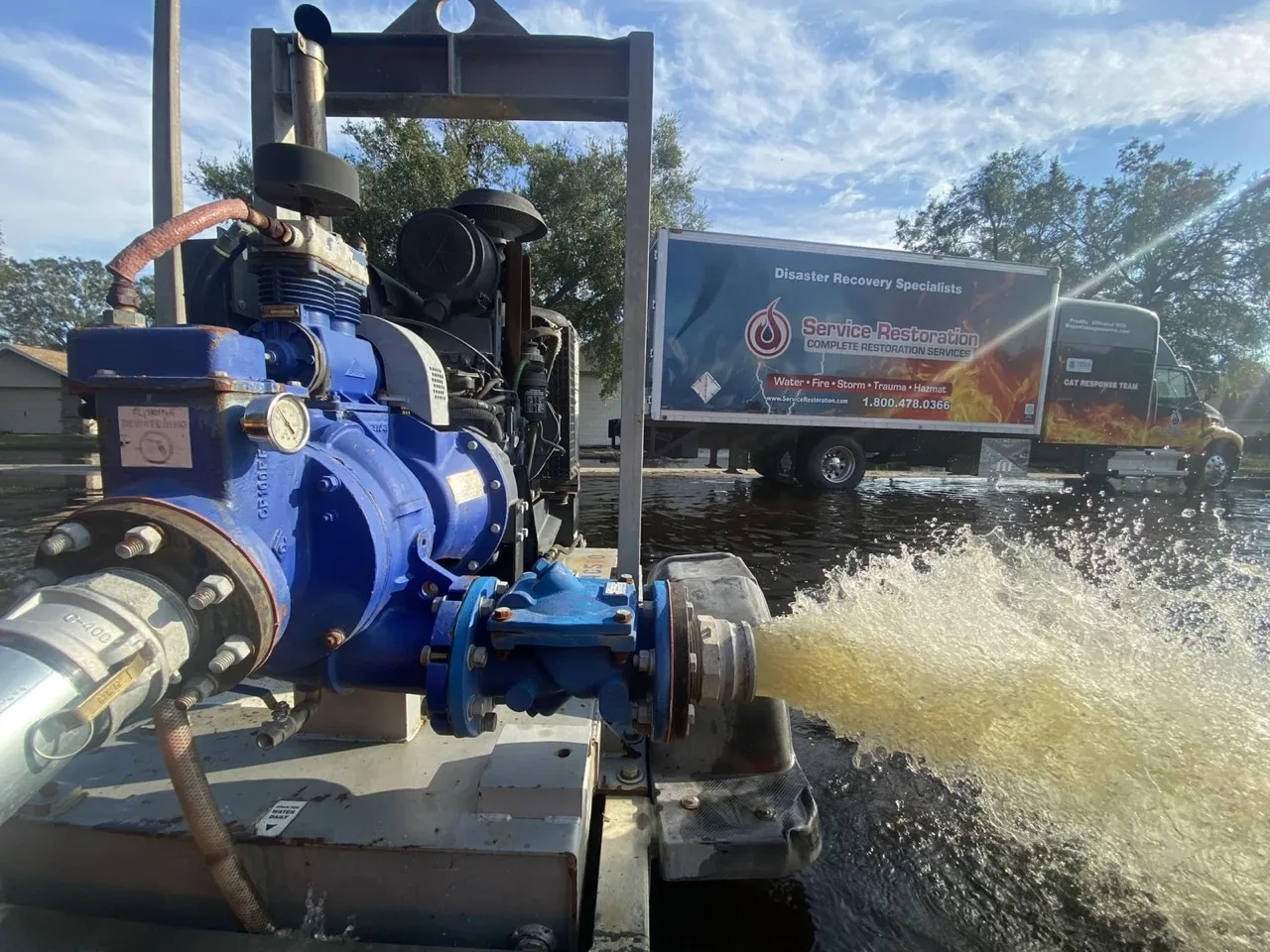
The Arkansas River runs along the whole south edge of the city, past the Argenta riverfront, the Arkansas Inland Maritime Museum and the long stretch of Burns Park on the west side. The high water of May and June 2019 pushed the river over its banks into the riverside parks and low ground on both sides, and it is the reminder that North Little Rock's river frontage is real flood plain. Day to day, the more common problem is a thunderstorm that drops several inches of rain in a few hours on the hills around Park Hill and Indian Hills and sends the runoff into lower streets, garages and ground floors on the east side and along the drainage ditches toward the river. Water that comes in from outside like that is treated as contaminated water, with different protective gear and disposal than a clean supply line leak. If the river or a ditch is still rising, the call center will say so plainly and tell you when drying can realistically start.
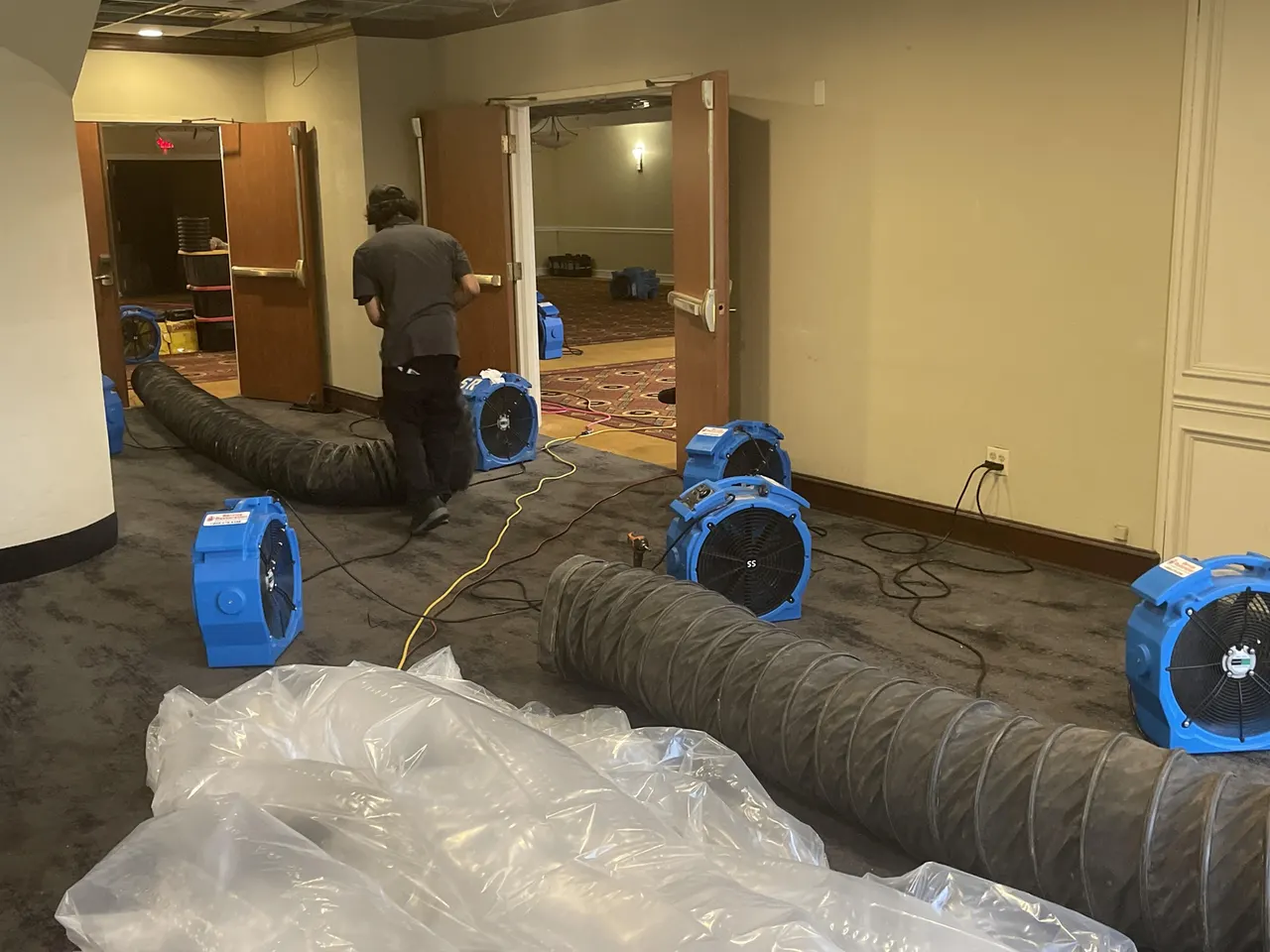
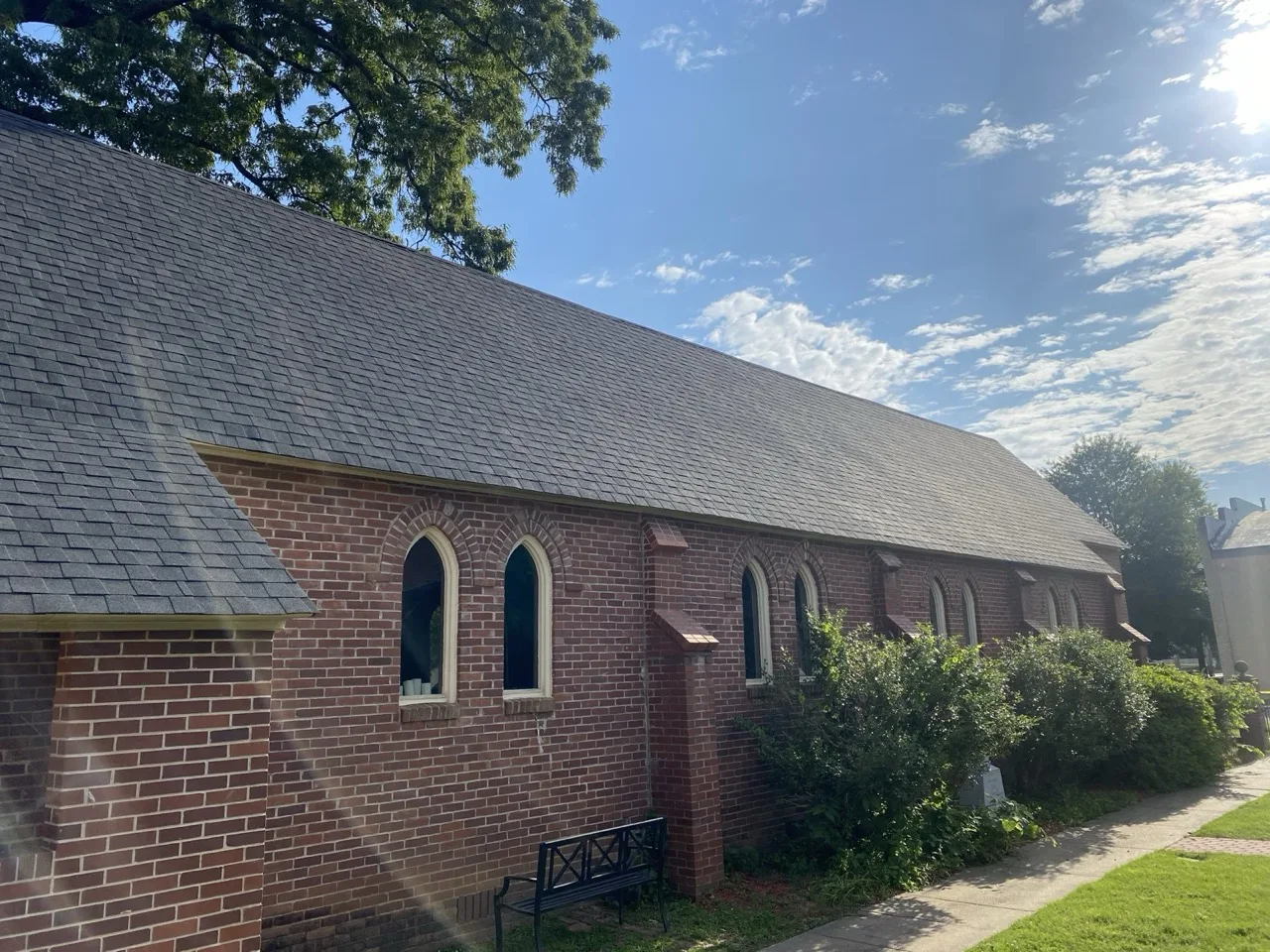
North Little Rock has more commercial property than its size suggests. Simmons Bank Arena and Dickey-Stephens Park sit near the river, hotels cluster along I-40 and the McCain Boulevard exits, McCain Mall and the retail around it run along McCain, and the Fort Roots VA campus sits on the hill above Park Hill. The University of Arkansas Pulaski Technical College campus, the medical offices around McCain and the large churches spread across every part of the city all depend on sprinkler systems, rooftop units and supply risers that tend to fail at night or over a holiday weekend. The company's commercial work in hotels, churches and office buildings, including a college building in Little Rock, is the background for those calls. On a large loss the team brings multiple crews and its own temporary power and air conditioning from the equipment library, so drying does not wait for a rental yard to open on Monday.
Fire, smoke and storm damage are handled the same way, by one company from the first call to the last coat of paint. That covers soot and smoke cleanup, extracting the water the North Little Rock Fire Department leaves behind, cleaning and storing contents, emergency roof tarping, debris removal and the reconstruction that follows. Every job starts with a free inspection, not a price quoted over the phone. The technician meters the structure, explains what has to be removed and what can be dried in place, and writes the loss up in Xactimate, the estimating software insurance adjusters use. Coverage is decided by your policy and your adjuster, case by case, and nobody on the team promises it. What the team does is document the damage with photos and readings before anything is torn out, so the adjuster sees the same picture the crew saw.
What causes the most water, fire and storm damage in North Little Rock?
North Little Rock shares central Arkansas's humid subtropical climate, and spring is the hardest season on its houses. From March through May, severe storms bring hail, straight-line winds and tornadoes, and the EF3 tornado of March 31, 2023 crossed the Arkansas River from West Little Rock and tore through North Little Rock neighborhoods before moving on into Sherwood. Those same storm systems drop heavy rain in short bursts, which overwhelms drainage on the east side and sends runoff off the Park Hill and Indian Hills ridges into lower streets. The Arkansas River is the long-duration risk, as the 2019 high water showed along Burns Park and the riverfront. Winters are usually mild, but the Arctic outbreaks of February 2021 and December 2022 showed what a few nights in the teens do to a city full of older crawlspace homes with exposed supply lines and newer homes with lines in the attic. Summer heat and humidity slow down drying, so equipment needs to be running within hours of a leak, not days.
What do North Little Rock jobs usually involve?
- Crawlspace and subfloor water damage under the pier-and-beam homes of Argenta and Park Hill, traced with meters under the house before any flooring comes up
- Slab leak, water heater and appliance losses in the mid-century ranches of Lakewood, Levy, Amboy and Rose City
- Frozen and burst supply lines in older crawlspaces and in the attics of newer two-story homes after a hard freeze
- Storm runoff, ditch overflow and river high water cleanup in low-lying parts of the east side and near the riverfront, handled as contaminated water
- Sprinkler, riser and rooftop unit losses in hotels, offices, churches and retail along I-40 and McCain Boulevard, with the company's own temporary power and air conditioning
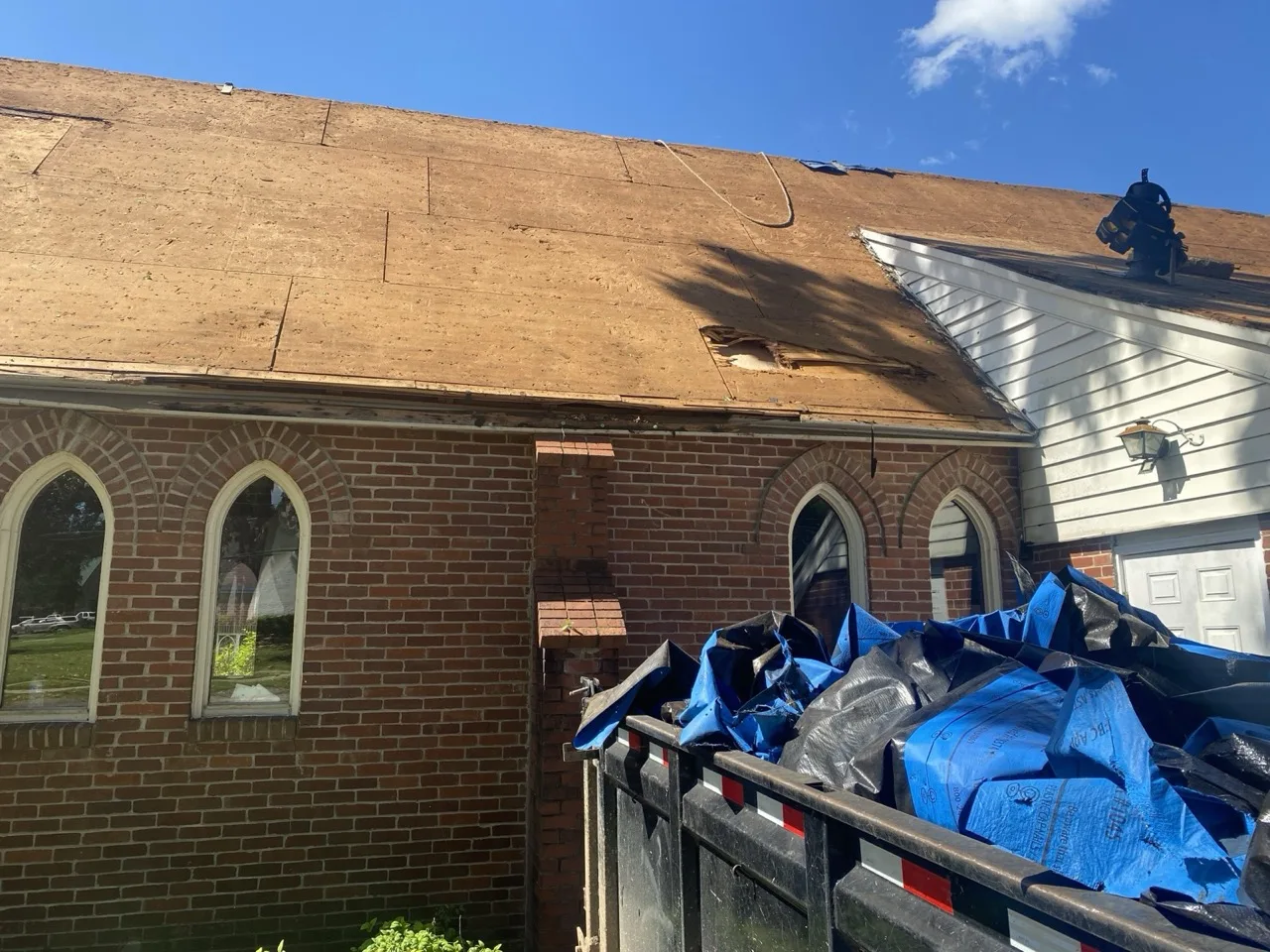
- Emergency tarping and debris removal after tornadoes and hail, plus fire and smoke cleanup, contents cleaning and storage, and reconstruction by the same company
Which North Little Rock neighborhoods do we cover?
Near the Arkansas River, Burns Park, Simmons Bank Arena, Dickey-Stephens Park, the Arkansas Inland Maritime Museum, the Old Mill in Lakewood, the Junction Bridge and Big Dam Bridge, Camp Robinson, the Fort Roots VA campus, McCain Mall, I-40, I-30 and US-67/167.
Which restoration services do we offer in North Little Rock?
North Little Rock questions
A crew is typically on-site within 60 minutes once the call center has qualified the job, depending on drive time, traffic, road conditions and how many calls are active. North Little Rock is served from the Little Rock offices, and the drive from the I-30 office into Argenta is about 15 to 20 minutes across the river on a clear road. Rush hour on the I-30 bridge, a wreck at the I-40 and I-30 interchange or ice on the bridges will stretch that, and the call center will tell you honestly if it will be longer. The phone is answered 24 hours a day, every day of the year, at (501) 200-4968.
Very often, yes. Cupping in an older Park Hill or Argenta home usually means moisture is coming up from below, from a supply line or drain leaking in the crawlspace, or from water that collected under the house after heavy rain. The technician goes under the house with moisture meters to find the source and map how far the subfloor and joists are wet, then decides whether the floor can be dried in place. Drying equipment is set up in the crawlspace as well as inside, and the floor is checked by meter, not by eye, because a floor can look flat and dry on top while the boards underneath are still wet. Wet wood left alone in a humid crawlspace is also how mold gets started, which is why the drying starts quickly.
Shut the water off at the main. In most North Little Rock homes that is at the meter box near the street, and in some older houses there is also a valve where the line enters the crawlspace. Turn off the power to any wet rooms at the breaker if you can do it without standing in water, move anything valuable off the floor and call. Do not try to thaw a frozen line with a torch or an open flame. Split lines in a crawlspace often run for hours before anyone notices, so the technician will check the subfloor, insulation and joists under the house as well as the rooms above.
For drying and mitigation only, an average flooded basement runs about $5,000 to $10,000 and an average kitchen water loss about $3,000 to $5,000. A rebuild that includes continuous flooring across several rooms, as when a slab leak spreads under the whole living area of a ranch, can take a job to $40,000 to $50,000. Those are ranges from completed jobs, not a quote for your house. The number for your property is confirmed by the free inspection, because nobody can price a water loss honestly before a technician has metered it.
That depends on your policy and your adjuster, and nobody on the team will promise coverage either way. In general, a burst pipe or a failed water heater is handled differently from water that came in from outside. Rising water from the Arkansas River or a flooded street is usually a flood policy question, and a standard homeowner policy may not answer it. What the team does is document the loss in Xactimate during the free inspection, with photos and moisture readings, and work with your adjuster once the claim is open.
Yes. Hotels along I-40 and McCain Boulevard, office buildings, retail, churches and school or college buildings are the kind of property the company has the most experience with. A sprinkler line or riser failure can run through several rooms or floors before it is shut off, so the team sends multiple crews and stages the work around occupants and building access. The company brings its own temporary power and air conditioning from its equipment library, which keeps drying moving even when the building's own power or HVAC is down.
Yes. The first step after a tornado or hail storm is stopping more water from getting in, so the crew tarps the roof opening and clears debris, then starts on the rooms below. Wet ceiling drywall and insulation come out, the framing is metered and dried, and contents are cleaned and stored while the work goes on. Reconstruction is handled by the same company afterward, which matters in the weeks after a big storm, when every roofer and contractor in Pulaski County is booked.