
The 15-second answer
Do we serve Jacksonville?
Service Restoration serves Jacksonville from its two Little Rock offices, 9524 I-30 and 7821 Doyle Springs Rd Suite F, each rated 5.0 stars on Google. Water, fire and storm damage calls get a local crew typically on-site within 60 minutes, depending on drive time, traffic, road conditions and call volume.
Key takeaways
- Jacksonville is served from two Little Rock offices, at 9524 I-30 and 7821 Doyle Springs Rd Suite F, each rated 5.0 stars on Google.
- A local crew is typically on-site within 60 minutes, depending on drive time, traffic, road conditions and call volume, and the call center will say so if it will be longer.
- Slab leaks in mid-century homes built after Little Rock Air Force Base opened, rental losses with owners far away and flash flooding along the Bayou Meto drainage shape most calls.
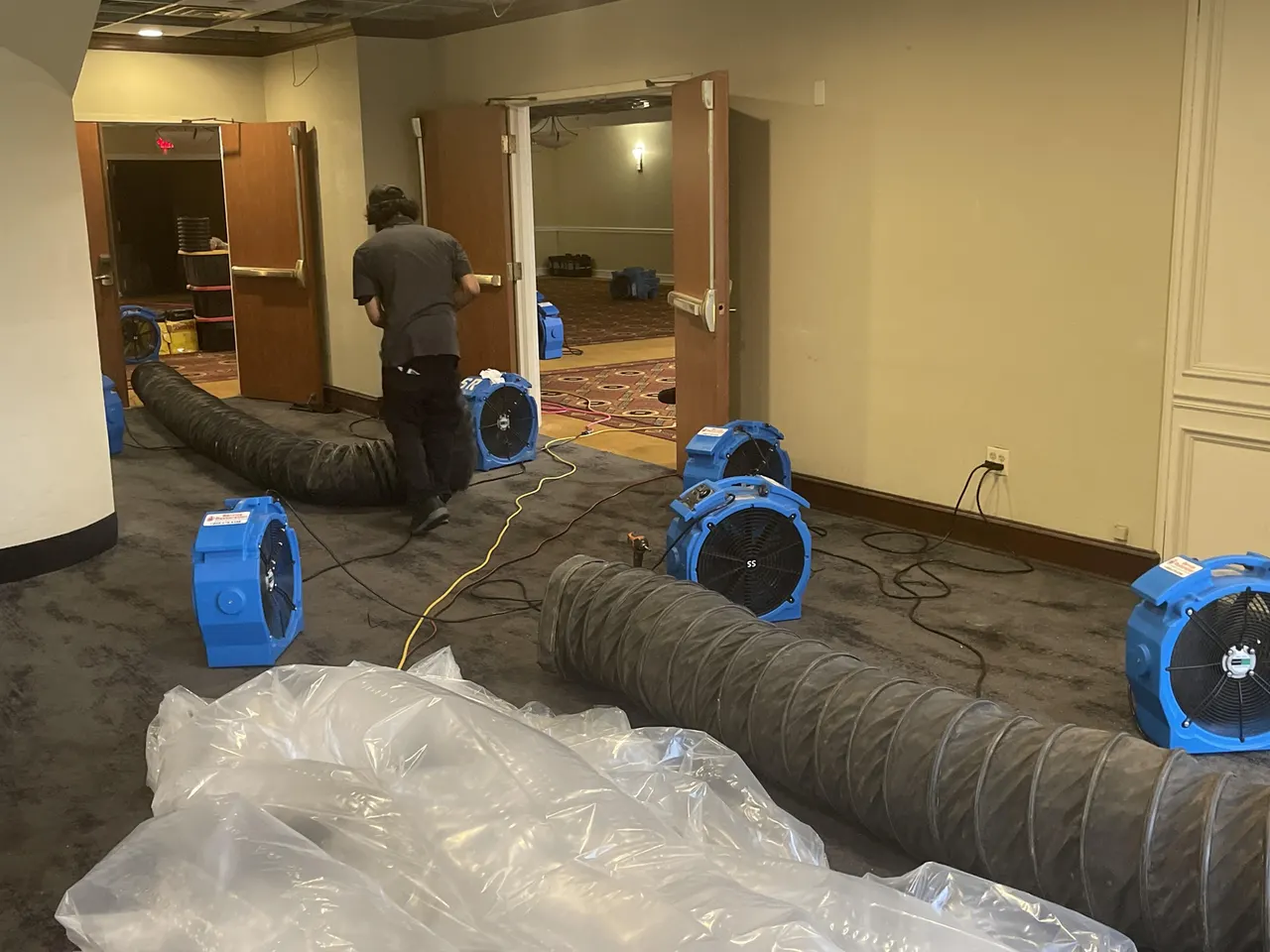
- Hotels, churches and offices get multiple crews and the company's own temporary power and air conditioning.
- Every job starts with a free inspection, and insurance coverage is decided by the policy and adjuster case by case, never promised.
Last updated
Jacksonville is about 25 to 35 minutes from Service Restoration's Little Rock offices, up I-30 across the river, east on I-40 and north on US-67/167. The company does not have an office in Jacksonville. It runs two in Little Rock, at 9524 I-30 and 7821 Doyle Springs Rd Suite F, both rated 5.0 stars on Google from 103 and 32 reviews, and Jacksonville calls are dispatched from there. Any call, day or night, goes to the 24/7 call center, which qualifies the job and sends a local team, typically on-site within 60 minutes depending on drive time, traffic, road conditions and call volume. Jacksonville sits near the outer part of that window, so a crew coming during afternoon traffic on US-67/167 or on icy roads will take longer, and the call center will tell you that up front. Service Restoration was founded in 2014 and is independently owned, not a franchise.
Modern Jacksonville was shaped by two federal projects. The Arkansas Ordnance Plant brought thousands of workers to the town during World War II, and Little Rock Air Force Base, the Air Force's main C-130 base, opened on the edge of town in the 1950s and has driven the local economy since. Much of the city's housing went up in the decades after the base opened: brick and frame ranches on concrete slabs, duplexes and small apartment buildings in the neighborhoods off Main Street, John Harden Drive and Vandenberg Boulevard. Those houses are now 50 to 70 years old, with original water heaters long since replaced in hall closets and garages, galvanized or early copper supply lines, and drain lines under the slab. A slab leak or a split supply line in one of these homes spreads under the flooring and into the bottom of the walls in several rooms before it shows.
Because of the base, a large share of Jacksonville homes are rentals, and a lot of the people living in them move on military orders every few years. That changes how a water loss plays out. The tenant often finds the leak, the owner may live in another state or overseas, and a property manager is in the middle. The company's process fits that situation. The free inspection is documented with moisture readings, thermal images and photos, and the loss is written up in Xactimate, so the owner, the property manager and the adjuster can all see the same scope even if none of them are standing in the house. Coverage is decided by the owner's policy, the tenant's renter's policy and the adjusters involved, case by case, and nobody on the team will promise it.
Bayou Meto winds past Jacksonville by the Reed's Bridge battlefield, and the smaller creeks and ditches that feed it carry runoff from across the city. When a spring storm stalls over north Pulaski County and drops several inches of rain, those drainage channels back up, low streets flood and water pushes into garages and across slab floors in the lower-lying neighborhoods. Floodwater from outside is handled as contaminated water, which means protective equipment, removal and disposal of soaked carpet, pad and drywall below the water line, and cleaning of the slab before drying equipment goes in. If the water is still rising when you call, the call center will be honest about when a crew can safely start.
Newer subdivisions on the north and west sides of Jacksonville, toward Gravel Ridge and Cabot, are mostly two-story homes from the 1990s onward. Their problems are different from the older neighborhoods: upstairs laundry rooms, attic air handlers with condensate lines that clog, and supply lines in the attic that freeze during a hard cold snap. When one of those lines splits, the water comes down through the ceiling, soaks the insulation and runs into the wall cavities below. Commercially, Jacksonville has hotels along US-67/167 that serve base visitors, churches across the city, schools, medical offices and the retail along John Harden Drive and Main Street. The company's work in hotels, churches and office buildings, and its own temporary power and air conditioning from its equipment library, are what it brings to those buildings when a sprinkler line or roof drain fails.
Fire and smoke damage is handled by the same company from start to finish, including soot and smoke cleanup, extracting the water the Jacksonville Fire Department left behind, cleaning and storing contents, and reconstruction. Storm damage gets emergency tarping and debris removal first, then interior drying. Every job starts with a free inspection, not a number over the phone. The technician traces the water with moisture meters and thermal imaging, explains what has to be removed and what can be dried in place, and documents it before anything comes out. The company is IICRC certified and EPA Lead Safe Certified, which is relevant in a city where so many homes were built before 1978.
What causes the most water, fire and storm damage in Jacksonville?
Jacksonville has central Arkansas's humid subtropical climate, with the most property damage coming in spring. From March through May, severe thunderstorms bring hail, straight-line winds and tornado warnings across north Pulaski County, and the EF3 tornado of March 31, 2023, which tracked through Little Rock, North Little Rock and Sherwood, was a reminder of how close those storms run to town. Slow-moving storms in the same season put Bayou Meto and the ditches that feed it out of their banks and flood low streets. Winters are short and mild in most years, but the Arctic outbreaks of February 2021 and December 2022 brought nights in the teens that split supply lines in attics, exterior walls and unheated garages, often in many homes in the same few days. Summer heat and humidity slow the drying of anything wet, so a leak in a closed-up rental while the tenant is away can spread a long way before anyone finds it.
What do Jacksonville jobs usually involve?
- Slab leak, water heater and supply line losses in the mid-century ranches, duplexes and small apartment buildings off Main Street, John Harden Drive and Vandenberg Boulevard
- Water losses in rental homes, documented with readings, thermal images and photos so owners, property managers and adjusters can follow the job from a distance
- Flash flood and ditch overflow cleanup in low-lying neighborhoods along the Bayou Meto drainage, handled as contaminated water
- Burst attic lines, clogged condensate lines and upstairs overflows in the newer two-story subdivisions on the north and west sides
- Sprinkler, roof and HVAC water losses in hotels, churches, schools and offices, with the company's own temporary power and air conditioning
- Emergency tarping and debris removal after storms, plus fire and smoke cleanup, contents cleaning and storage, and reconstruction by the same company
Which Jacksonville neighborhoods do we cover?
Near Little Rock Air Force Base, US-67/167, Bayou Meto, Reed's Bridge Battlefield Heritage Park, the Jacksonville Museum of Military History, Dupree Park, John Harden Drive, Vandenberg Boulevard.
Which restoration services do we offer in Jacksonville?
Jacksonville questions
Jacksonville is served from the Little Rock offices, about 25 to 35 minutes away by I-30, I-40 and US-67/167 on a clear road. A crew is typically on-site within 60 minutes once the call center has qualified the job, depending on drive time, traffic, road conditions and call volume. Rush hour on US-67/167, a wreck near the I-40 interchange or icy roads can push that out, and if it will be longer, the call center will tell you straight. The phone is answered 24 hours a day at (501) 200-4968.
Anyone can make the first call, and in an emergency the tenant often should, because the priority is stopping the water. Shut off the main and call. After that, the property owner or manager needs to authorize the work. The team documents the loss with photos, moisture readings and thermal images and writes it up in Xactimate, so an owner who is out of state or overseas can see exactly what was found and what is proposed. The tenant's belongings are generally a question for a renter's policy, and the building is a question for the owner's policy. Coverage on both is decided by the policies and the adjusters, case by case.
Call as soon as you find it, even if the move is days away, because water under a slab floor or behind a wall keeps spreading and the house will sit closed up after you leave. Let your landlord or property manager know at the same time. The free inspection will show how far the water has gone, and the documentation from that visit gives the owner and the adjuster a clear record of what was there when you found it. Drying equipment can run while you finish packing, and the technician can tell you how many days it is likely to need.
Yes. Water that comes in from outside, from a flooded street or an overflowing ditch, carries soil, runoff and whatever else it picked up along the way, so it is handled as contaminated water. The crew wears protective equipment, removes and disposes of soaked carpet, pad and drywall below the water line, and cleans the slab before drying starts. It is also often treated differently by insurance from a burst pipe. Surface water and rising water are usually a flood policy question, so check your policy and talk to your adjuster. Nobody on the team will promise coverage.
For drying and mitigation only, an average flooded basement runs about $5,000 to $10,000 and an average kitchen water loss about $3,000 to $5,000. A rebuild that includes continuous flooring across several rooms, as when a slab leak spreads under the whole living area of a ranch, can take a job to $40,000 to $50,000. Those are ranges from completed jobs, not a quote for your house. The number for your property is confirmed by the free inspection, because nobody can price a water loss honestly before a technician has metered it.
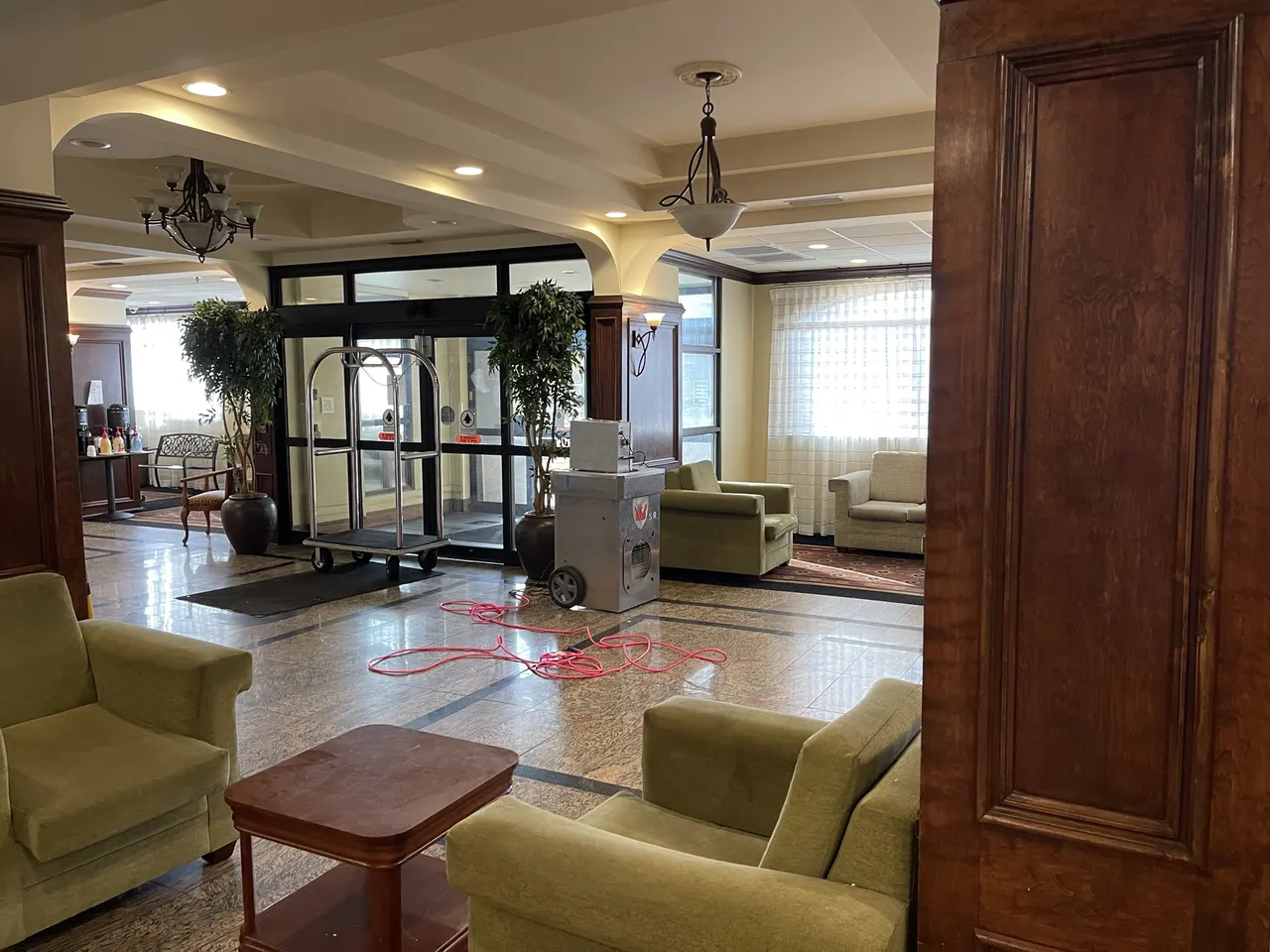
Yes. Hotels, churches and office buildings are where the company has some of its most extensive experience. A sprinkler line or a roof drain that fails over a weekend can soak several rooms or a whole wing, so the team sends multiple crews and works around guests, services and building access. The company brings its own temporary power and air conditioning from its equipment library, so drying does not depend on the building's power or HVAC being up, or on a rental company being open.
All of Jacksonville, from downtown and the older neighborhoods off Main Street and John Harden Drive to the newer subdivisions toward Gravel Ridge and Cabot, plus Sherwood, North Little Rock and the rest of Pulaski County. The two Little Rock offices cover roughly a 90 minute radius. Response times further out run longer than inside Little Rock, and the call center will give you a straight answer on timing when you call.